In reading this article, this is what is happening now as folks are calling in the “consultants” who they have to pay to teach the doctors, nurses and others on staff how to document so claims are paid correctly and promptly. Who pays for this, the hospitals, so one more expense coming on board for many hospitals that are already financially strapped. This is kind of a catch 22 item as if they don’t invest they run the gambit of lower compensation and on the other hand they also look to make sure the hospital is not over charging. You wonder sometimes when you read about all these “fines” that hospitals pay for billing errors, is the hospitals no coding right or is it the software and lack of education rolled in there? Sure there are the obvious cases but each case is it’s own. You can even buy a shirt that says don’t bother me, I’m coding.
Some insurance companies, like United Healthcare also created their own clearinghouse subsidiary to audit the bills before they are sent on. Most providers today do use some type of clearinghouse to check their work for accuracy and with a clearinghouse subsidiary it’s a bigger piece of the pie for overall corporate revenues as this subsidiary servers to generate revenue by subscriptions whereby the hospitals pay for this service, so they could end up with 2 legs of the process here with medical billing with clearinghouse services subsidiaries that check for accuracy before it hits their claims processing. United has so many subsidiaries anyway though and have recently hired former Minnesota Assistant Attorney General as general counsel as well as hiring the former HHS executive created most of the provisions of the healthcare law.
OptumInsight (A Wholly Owned Subsidiary of United HealthCare Optum Division) Creates Medical Clearinghouse Integrated With Epic Practice Management Software-Subsidiary Watch
US Health Insurance Regulator Leaving to Take a Job at UnitedHealth Care As Vice President of the Optum Division – Moving to the “For Profit Side” With Business Intelligence Algorithm Dollars To Review
Meanwhile back at the ranch, HHS Secretary Sebelius is counting on algorithms only while the powerful folks formerly  in government leave and move over to the “for profit” side and they will have an advantage for sure at United as these folks bring with them knowledge as to how the government operates or doesn’t operate on the other side. This kind of reminds me of the PBS 4 part documentary to where they spoke with former brokers who made a lot of money and they all admitted they were given the tasks to “find loopholes” so they could make even more money. Watch this PBS 4 part video series on Wall Street
HHS Secretary Sebelius Still Looking for Tech Breakthroughs To Save the Day
So the long and short of this is more training of doctors and nurses with additional expenditures to create faster claim processing for the hospitals while the bottom line of insurers’ subsidiaries continues to grow. No wonder medical records are taking on a new reputation as they are now being created for the benefits of compensation rather than clinical care.
There was an article on the web this week that more doctors are using electronic medical records and liking it less, and this kind of tells the story why as now we have yet one more layer of expertise to use and pay for to make all of this happen, and the payers benefit, not so much the patients for the most part. BD
When it comes to patients getting an error-free medical bill, the name of the game for doctors and hospitals is documentation.
That's because if the care isn't recorded and well-documented while it's being provided, insurance companies and federal payers will ask for more information later. Payment for services slows down, and chances for mistakes skyrocket.
That can mean checking that seemingly obvious details are recorded. For instance, each time a nurse starts an IV, she must write it down because there is a charge for the equipment used, Bauschka explained.
That chart -- whether it is electronic or paper -- is also key for the coders, who translate the care documented on the chart into billable codes, said Kathy DeVault, director of professional practice at the national industry organization American Health Information Management Association.
Many health systems and doctors' offices struggle with documentation because of a lack of staff training, DeVault said, adding that "what seems very simple from the outside looking in, is very complex."
http://www.cleveland.com/healthfit/index.ssf/2012/06/many_providers_turn_paperwork.html

 ethically doing business, but as you read in the news, we are all of sudden finding a entire slew of folks who are not, surprised? You shouldn’t be as this has been going on a long time but as folks getter smarter about the methodologies that have been used for a number of years, it’s all coming out. Sure someone can like their business algorithms but if ethics are compromised in the act then what do we have? Maybe I should ask someone on Wall Street about that while I’m at it. What started all of this..a stolen notebook that shows their lack of ethics and HIPAA violations.
  but nine notebooks were stolen so nine times the potential exposure possibly, depending on what they were carrying around. The Vice President of the company left a non encrypted laptop with around 24k patients' information on the computer, gee and we wonder why executives are kind of useless today, but you could almost be he preaches to employees NOT to do this:) This was also Chapter 28 of my Attack of the Killer Algorithm series.
  disease (PAD) and if you are not familiar with PAD (peripheral arterial disease) , here’s a couple back links and an interview I did with Cook Medical a while back with Rob Lyles with Cook Medical.. CLU occurs when PAD goes to the worst case and leads to amputation to where 25% of the patients die due to the procedures. Let’s face it nobody wants to lose a leg. Back in 2009 I first spoke with Rob Lyles from the peripheral intervention division.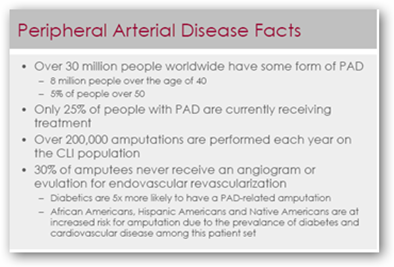
 cross arterial blockages. Individuals1 and single centers
 Sometimes it’s interesting to take a look at what’s happening in other countries relative to the rising cost of healthcare and when you read this it’s apparent that this is not only an US problem. Granted Israel is a much smaller country but the problem are the same, money or lack of. Just a couple months ago, doctors who work for the state received an order that they needed to punch a time clock. How would that work in the US…I don’t think it would accomplish much here.
 a former software writer, hopefully some of this will explain in layman’s terms how some of this works behind the scenes it may offer some answers. It’s not going to make you happy but it will open your eyes as to how the world of technology functions today with decision making and perhaps give you an idea of where it’s headed too.
 Math–This Could be a Subject for Michael Moore to Explore and Document In a Movie


 Screenings Too–Killer Algorithms Part 12–Medical Billing Codes Style

 Assessing Consumer Credit Scores–Attack of the Killer Algorithms Chapter 21 With Flawed Data


 awareness and how we and our government moves forward with this reality, it remains to be seen if we can scoot around the big white elephant in the living room that nobody can see, touch or talk to <grin> but it roars. Richard Cordray has his work cut out for him and that is an understatement.
 out for other agencies and I wrote about that a while back. Too bad our Congress has not figured out that they too could maybe ask the DOE for some super computing space to figure out their data needs when making laws:) Looks like we booted China out of the #1 spot, at least for now.
 supercomputer built on IBM Power architecture at the Department of Energy’s Lawrence Livermore National Laboratory in California. The emergence of Sequoia has returned the U.S. to the top spot of the
  covered what was going on with Mr. Ellison and Oracle but when you hear the entire interview you get a real glimpse of how he thinks and works and we haven’t heard a lot of that as this goes beyond the media coverage you normally hear. I like how he discusses the “cloud” technology and he’s right, it has been around forever and the opinion on how it became the buzzword we live by today is interesting.
  Hawaii too. He has no limits:) When asked about his image that is projected in the media, he’s extremely funny and candid. He’s definitely one of a kind and has the left brain in gear and then some as he knows code as well as marketing and his company. It took 6 to 7 years to re-write all the Oracle applications for the cloud, so keep this in check when you think about how we function today and the amount of coding and development it takes to move to the cloud with applications. I said a while back when the President had his meetings with the brilliant men of code, he was there to learn, “aka men who write code”.
  . He says it is madness that someone gets their PHD from Stanford and then get a note to “get out”. We don’t have enough “trained engineers” in the US and finishes up the interview by saying “it’s insane” what we do. I agree. Great interview and nice insight into what makes “Larry” tick..he’s one of most valuable “hybrid” personalities and individuals walking the earth today and he has logic, marketing, engineering and humor all wrapped into one.
  practices knows what that is as it continued on from the original structure with paper charts right into electronic medical records and basically is the ground work to cover all the important items in a visit with a patient. The PKC data base was created to give support for “meaningful use” as well. What is interesting here is the access that patients will have to the data base of information and will be able to use it and forward to a physician and this way to put it in simple terms the doctor has the basis of the information he needs with contributions from the patient, and in the process the patient gets smarter too, so it sounds like this is a win-win. When Sharecare first came out, I had some reservations as we all do until we see it in actual operation and how it is formatted for use on the web. The big key here is to get “credible” information as the web is a jungle today.
  networks and become friends, a little like Facebook in format and each physician or other professional contributor has a profile of how many questions they have answered and where they are so in essence it looks like it drives some potential business to them if they might happen to be in the area of an inquiring consumer.
 Mehmet Oz and WebMD founder Jeff Arnold.
  cells have huge value as they are the ones that can be converted to other stem cell types, in other words you can take skin stem cells and turn them in heart cells for an example with reprogramming the production process. iPS cells were probably one of the biggest advances we have had with stem cell creation and what it enables science to accomplish. Disease treatments, growing human body parts for example are all wrapped into this area of R and D.
  the news with older policies being cancelled and new ones written. Some may accomplish this via marketing efforts and the old policy rates go out of reach as far as being able to afford so consumers are kind of forced to make a decision at that point. Those with pre-existing conditions sometimes can’t switch to a policy that is comparable or better and thus are trapped to take what they can afford and have to abandon their original policies as they can’t afford the premiums any longer.
  the data reported was not accurate either, so why have it. I’m sure it’s getting better as time moves on but I glanced through the list and guess what, not one hospital in Massachusetts was listed? What’s up with that. It might have something to do with the hospitals in that state contesting how Health Grades came up with their numbers, and they are right to question.

 What is interesting is to see the alcohol beverage industry jump in to this so you can read about the vodka you are about to digest but for something that could potentially have a deadly or bad side effect…nothing.
 of the nation’s prescription drug supply is poised to pass Congress, but without a tracking system that public health advocates say is critical to weeding out counterfeit pharmaceuticals.