Showing posts with label Pharma/FDA News. Show all posts

Thursday, June 21, 2012

Larry Ellison The Full and Uncut Interview At the All Things Digital Conference–The Good Stuff - How Larry Thinks and and Works – “Men Who Know Code”

I posted the highlights version of the interview which basicallyimage covered what was going on with Mr. Ellison and Oracle but when you hear the entire interview you get a real glimpse of how he thinks and works and we haven’t heard a lot of that as this goes beyond the media coverage you normally hear.  I like how he discusses the “cloud” technology and he’s right, it has been around forever and the opinion on how it became the buzzword we live by today is interesting. 

Hardware is software he states and the complicated process is the software and he’s the “product guy” at Oracle.  Oracle is not a consumer business but they sell to consumer oriented companies, like Apple.  He’s been around for a long time and knows the players and their technologies.  It’s humorous to hear him talk about SAP and how they admitted to stealing patented technology.  “You want me to give HP advice”…classic and you have to hear the history he gives here.  You can read about his NIH award from last year. 

Larry Ellison Announced As Distinguished Medical Informatics Awardee for His Contributions to Health IT and the Ellison Foundation From the Friends of the National Library of Medicine (NIH)

He’s also part of the “Giving Pledge” along with Bill Gates, Warren Buffet and others. 

The Giving Pledge Call for Philanthropy Continues to Grow–40 Billionaires Committed


He’s fascinated with technology and it shows how he tests limits.  If you read the news in the last couple days, he has is own island now in imageHawaii too.  He has no limits:)  When asked about his image that is projected in the media, he’s extremely funny and candid.  He’s definitely one of a kind and has the left brain in gear and then some as he knows code as well as marketing and his company.  It took 6 to 7 years to re-write all the Oracle applications for the cloud, so keep this in check when you think about how we function today and the amount of coding and development it takes to move to the cloud with applications.   I said a while back when the President had his meetings with the brilliant men of code, he was there to learn, “aka men who write code”. 

President Obama Meeting with Tech Industry Leaders–CEOs and Some of the Smartest CEOs (Algo Men) Who Write Code


He discusses “Workday” and and how Salesforce and many others use “Oracle” and how “Workday” doesn’t use one.  He knows his engineering and infrastructure. In the question and answer session he is asked about what he is doing for healthcare and he talks about the Ellison Medical Foundation (and jokes about how long it took him to come up with that name) and how they are focused on  “diseases related to aging” “for obvious reasons he states”..funny.  The do both primary and applied research in this area with about a billion to support it.  They are also simulating molecular computational control and building chemical simulators so they can design and test drugs.

Oracle is bringing back manufacturing to the US as well and he also brings up the shortage of engineers in America.  He said we need engineers who are trained in the US to stay in the US and not leaveimage.  He says it is madness that someone gets their PHD from Stanford and then get a note to “get out”.  We don’t have enough “trained engineers” in the US and finishes up the interview by saying “it’s insane” what we do.  I agree.  Great interview and nice insight into what makes “Larry” tick..he’s one of most valuable “hybrid” personalities and individuals walking the earth today and he has logic, marketing, engineering and humor all wrapped into one. 



I can hardly wait to see and hear what he does with his new island too:)  BD  


Perhaps more than any other tech figure in Silicon Valley, Larry Ellison — now also trying to become the proud owner of Hawaii’s Lanai — is, for lack of a better word, the man.

It’s a bit about endurance (he’s been at it since 1978, when he founded Oracle), a bit about success (the database giant still remains a very powerful force in the industry), a bit about spoiling for a fight (Hewlett-Packard, SAP, any small cloud company that irks him) and a lot about style (America’s Cup sailing, his gazillionaire Ironman persona and, for goodness sake, he is planning on buying an entire Hawaiian island, presumably for a lair). Ellison has the kind of long-term and powerful perspective that is rare in the app-happy Web 2.0 era of small ideas and too-big valuations.

http://allthingsd.com/20120621/larry-ellison-tells-it-like-it-is-the-full-d10-interview-video/?mod=tweet

Sunday, June 17, 2012

German Pharmaceutical Company Biotest To Stop Shipments to Greece in July–Bills Have Not Been Paid


Biotest also has an office in the US in Florida.  According to this articleimage there are other medical issues with hospitals cutting off vital drugs and limiting surgical procedures that are owned by the state.  It continues on to talk about exhausted doctors and their lack of supplies as well.  BD


FRANKFURT/ATHENS (Reuters) - German pharmaceutical firm Biotest said it would stop shipments to Greece in July, becoming the first drugmaker to announce it would quit the debt-mired country's market because its bills had not been paid.

Though a relatively small player in Greece, the company's exit sets an unwelcome precedent for a country whose healthcare system is crumbling under the weight of economic crisis and administrative deadlock.

Biotest's Ramroth said Greece had paid all its outstanding bills for 2010 but still owed the company - which makes products from blood plasma to treat severe burns, hemophilia or tetanus - 7 million euros ($8.8 million) for 2011.

Already, Greece's rundown state hospitals are cutting off vital drugs, limiting non-urgent operations and rationing even basic medical materials for exhausted doctors.

http://news.yahoo.com/germanys-biotest-first-drugmaker-exit-greece-050833865.html

Saturday, June 16, 2012

Rosetta Genomics Terminates Deal with Chinese Diagnostic Firm Due to Breach of Agreement

Basically it sounds like the Chinese company didn’t pay for the rights to market Rosetta’s diagnostic products.  Rosetta is an interesting imagecompany using mRNA and back a couple years ago I interviewed the company and learned about their test that determines “cancer of the unknown primary” which means that cancer in the kidney for example may not really be kidney cancer but rather a cancer that originated in another part of the body and treatments are very specific today for cancer types.  Medicare just announced a few days ago that they would cover Rosetta’s tests as well.  BD 



Rosetta Genomics Interview – microRNA for Diagnosing Lung Cancer Tumors


NEW YORK (GenomeWeb News) – Rosetta Genomics said today it is terminating a licensing deal with Avatao Biotech, accusing the Chinese diagnostic firm of material breach of an agreement.

The Israel-based molecular diagnostics firm said in a document filed with the US Securities and Exchange Commission that it delivered notice to Avatao on June 12 of its decision to terminate an agreement reached by the two companies in October covering China.

The deal between the two companies gave Avatao exclusive rights to market Rosetta's miRview mets and miRview mets2 diagnostic tests in China. Avatao also had the rights to market an additional Rosetta product in China, to be chosen within one year. In addition to China, the deal covered Hong Kong, Macau, and Taiwan.

http://www.genomeweb.com/mdx/claiming-breach-agreement-rosetta-genomics-ending-licensing-deal-avatao

Thursday, June 14, 2012

FDA Commissioner Margaret Hamburg Delivers Commencement Address at Albert Einstein College of Medicine–Video

Would you like to know more about Dr. Hamburg, listen to her address. image She talks not only about the students but also about here feelings and dedication as head of the FDA.  She commends community outreach programs.  The concern for man and his fate she states is imperative.  She did her medical residency in New York and served as the city’s health commissioner.  She talks about the early days of AIDS and the need for integrated health services. 

There is no substitute for human caring and compassion she states and that patients put their their trust in their doctorsimage first, not a machine.  Medicine is also an art who bring both technology and humanity and caring to the bedside.  The  more dependent that doctors become on technology she says its easy to lose track of compassion and caring and urges students not to lose it.  She also talks about evidence based medicine and the importance it has.  Good decision making requires good listening skills she states, and hold on to the “moral compass” and see yourself as part of a “team” and show compassion for the uninsured.  Great address to the graduating class!  BD 


Albert Einstein Commencement–Dr. Margaret Hamburg FDA Commish

Margaret A. Hamburg, M.D., the 21st commissioner of the U.S. Food and Drug Administration, delivers the commencement address at Albert Einstein College of Medicine's 2012 commencement ceremony at Avery Fisher Hall in New York City on May 30

http://www.youtube.com/watch?v=LrxViE5CSvA

Monday, June 11, 2012

Johnson and Johnson To Sell Wrist Fracture Division in Order To Acquire Synthes

In order to not have 70% of the available business in the fracture business, a sale of a subsidiary is required so Biomet will buy the DVR division.  When you look at the overall price they are paying for Synthes, this seems like a drop in the bucket.  BD
Johnson & Johnson Agrees to By Synthes $21.3 Billion


NEW YORK — Johnson & Johnson will have to sell its system for surgically treating serious wrist fractures to win federal clearance of its pending $21.3 billion acquisition of Synthes Inc.

The New Brunswick, N.J., health care giant agreed to buy the Swiss orthopedic device maker last year in its biggest deal ever.

The Federal Trade Commission is approving the transaction as long as Johnson & Johnson sells the wrist fracture system, called DVR, to Biomet Inc. of Warsaw, Ind. Otherwise, the FTC says, the two companies would control more than 70 percent of the market for such systems.

http://www.washingtonpost.com/business/johnson-and-johnson-gets-ftc-approval-to-buy-synthes-must-sell-wrist-fractures-unit-to-biomet/2012/06/11/gJQANeElVV_story.html

Sunday, June 10, 2012

Non Invasive Eye Test Can Accurately Detect Carotid Artery Stenosis–Condition That Makes People Vulnerable to Strokes

This makes sense with seeing the condition of the eyes through the test which can be done during a regular eye exam.  According imageto the press release the test is accurate in identifying patients who have clogged arteries.  The process is used quite a bit in Europe and not much across the US, according to the press release.  We read all the time about dentists and new contributions they can make with using new technology that can also detect early onset of medical conditions so why not the eye too? 
If nothing else it sends up a “warning flag” that getting checked out may not be a bad idea and it is certainly less expensive than an MRI.  There are no symptoms sometimes so again an eye exam could be a good early warning sign if the data is there.  BD   


American Academy of Ophthalmology

Press Release:

SAN FRANCISCO – June 7, 2012 –

A simple eye test may someday offer an effective way to identify patients who are at high risk for stroke, say researchers at the University of Zurich. They showedimage that a test called ocular pulse amplitude (OPA) can reliably detect carotid artery stenosis (CAS), a condition that clogs or blocks the arteries that feed the front part of the brain. It’s a known risk factor for stroke.

The OPA test could be performed by ophthalmologists – physicians who treat eye diseases – during routine exams. The study, which is published in the June issue of Ophthalmology, the journal of the American Academy of Ophthalmology, confirmed that patients who had the lowest OPA scores also had the most seriously blocked arteries.


Each year, approximately 795,000 Americans suffer a new or recurrent stroke, and more than 137,000 of these people die as a result.[i] People with severe CAS are much more likely to suffer stroke. Physicians would like to catch and treat CAS before that can happen, but because CAS has no symptoms and an efficient test is not currently available, the disease often goes undetected.

The Swiss research team used a device called the dynamic contour tonometer to check the OPA of 67 patients who were assumed to have CAS. The OPA score is calculated by finding the difference between the two pressure levels that occur inside the eye during the two phases of the heartbeat − the systolic and diastolic.

The tonometer measures the two pressure levels, then instantly computes the patient’s OPA score. When blood flow to the eye is blocked by CAS, there is not much difference between the two pressure levels, so the OPA score is low. The study confirmed that patients with the lowest OPA scores also had the most seriously blocked arteries. The researchers used ultrasound exams to corroborate that each study participant had CAS and to detail the severity of his or her blockage.

“Our results show that ocular pulse amplitude is a reliable, safe screening test for carotid artery stenosis,” said lead researcher Pascal Bruno Knecht, M.D. “We recommend further study to confirm the value of using OPA to detect and assess the severity of CAS and to define its use in stroke prevention.”

A research review performed for the U.S Preventive Services Task Force indicated that if an efficient screening test for CAS were available, the incidence of stroke and fatalities due to stroke could be substantially reduced.[ii] The review stated that the test should be able to detect clinically significant CAS, defined as 60 percent to 99 percent blockage of the carotid arteries.

Some high-tech tests, such as magnetic resonance angiography and color duplex ultrasound, already meet this standard, but they are expensive and not widely available. Their primary use is in diagnosing patients who already have symptoms of stroke.

It could be efficient to perform the OPA test during a standard eye exam, if the ophthalmologist is already using the dynamic contour tonometer to screen for glaucoma. This type of tonometer is not widely used in the United States, although it is in Europe.

The researchers say that other than CAS, very few diseases could cause low OPA scores, and that an ophthalmologist could easily rule out these other diseases during an eye exam.


About the American Academy of Ophthalmology
The American Academy of Ophthalmology is the world’s largest association of eye physicians and surgeons — Eye M.D.s — with more than 32,000 members worldwide.  Eye health care is provided by the three “O’s” – ophthalmologists, optometrists, and opticians. It is the ophthalmologist, or Eye M.D., who can treat it all: eye diseases, infections and injuries, and perform eye surgery. For more information, visit www.aao.org 

The Academy’s EyeSmart® public education program works to educate the public about the importance of eye health and to empower them to preserve their healthy vision, by providing the most trusted and medically accurate information about eye diseases, conditions and injuries. Visit www.geteyesmart.org to learn more.image

About Ophthalmology
Ophthalmology, the official journal of the American Academy of Ophthalmology, publishes original, peer-reviewed reports of research in ophthalmology, including basic science investigations and clinical studies. Topics include new diagnostic and surgical techniques, treatment methods, instrument updates, the latest drug findings, results of clinical trials, and research findings. Ophthalmology also publishes major reviews of specific topics by acknowledged authorities.

Saturday, June 9, 2012

FDA Approves New Clinical Trial for Cancer Treatment By Supercharging Immune Systems For A Cure –”Zap Cancer” Bone Marrow/Stem Cell Institute in Florida

The clinical trial is looking for contributions for this process.  It is being called a “potential cure” but the results of the trial will further define that.  imageThis process involves boosting the immune system, and there are several biotech drugs in development that work the same process.  The trial is based on a study done at Wake Forest and we all know what they also do there, they grow human organs and several folks are walking around with bladders grown in petri dishes.

Scientists At Wake Forest Grow a Mini Liver From Human Cells–Regenerative Medicine


Urethras Grown at Wake Forest–6 Years Later Five Young Men Are Doing Fine


The institute has requested funds and grants from the NIH and they are also looking for private contributions to get the trial moving.  By boosting the white cell immune system they were able to “cure” mice who had cancer.  The FDA approved this process for human trials.  Based upon seeing mice cured, this looks to be very promising.  They are looking for donors as well and have not had a problem finding healthy people who can give blood. 

The home page for the clinical trials can be found here.  When a qualified patient is identified, granulocytes are collected from image“matched donors”.  The institute also offers other cancer treatments to include leukemia, multiple myeloma and more.  The patients participating in the trial will be those who have already tried conventional therapies and have not had a response.  The trial page goes into detail as well about being a donor, the procedure and the two drugs administered during the process. 
This is the first ever approved trial using this study protocol to sold tumor cancers.  The video below is very good on explaining how cancer comes back and the ultimate goal here is to stop the process by giving the body enough power in their own system to fight back.  The process sounds like it would make sense and if it works, well this could be a cure.  BD 

Zap Cancer

From the website:

“Our clinical protocol is based on a 1999 study conducted at Wake Forest University by Dr. Zheng Cui. Dr. Cui discovered a cancer resistant mouse. No matter how Dr. Cui attempted to infect this mouse with cancer, he couldn’t do it, the mouse’s immune system was just too strong. Forty percent of this mouse’s descendantsimage inherited the same significant cancer resistance. The white blood cells of these mice were able to seek out and destroy cancer cells not only in cell cultures, but also in living mice. Dr. Cui designed a test to measure this Cancer-Killing Activity, called CKA, and used those cells from cancer resistant mice to cure other mice with cancer. Further investigation showed that high levels of CKA granulocytes were also found in the white blood cells of some healthy people, specifically in the immune systems of young healthy humans around the age of eighteen to twenty-five.

White cell infusion therapy essentially translates the basis of Dr. Cui’s discovery into humans.
Instead of using white cells from mice whose immune system prevented them from developing cancer, we’re using the white cells taken from the immune systems of twenty year olds. If you take a twenty year old and you look at the incidence of cancer versus a seventy year old, a seventy year old has a one-hundred times greater risk of cancer. That’s because the immune system of young healthy donors are so much stronger. In theory, this study treatment may have the ability to supercharge the immune system using carefully cross-matched cancer-killing granulocytes donated by healthy young donors.”


Press Release:
Boynton Beach, FL, June 8, 2012
- Chances are, you know someone who has been diagnosed with cancer. One out of every three women will contract the disease in their lifetime; for men the odds are even greater. Now, an exciting new protocol has received approval from the FDA and WIRB (Western Institutional Review Board) to conduct a Phase I/II clinical trial on humans for treatment of solid tumor (metastic) cancers using a treatment designed to “supercharge the patient’s immune system and “zap” the cancer cells, destroying them.”  

Leading the investigation is Dr. Dipnarine Maharaj, Director of the South Florida Bone Marrow and Stem Cell Transplant Institute in Boynton Beach, Florida. A hematologist and oncologist, Dr.  Maharaj has been successfully treating patients with blood cancers for years using stem cell treatments. The clinical trials now underway target solid tumor cancers such as breast, cervical, stomach, pancreatic, lung, and melanoma.

As Dr. Maharaj explains, “A characteristic of a metastic cancer cell is the way it divides into twins. One of the twins will actually begin to form imagetissues while the other twin lies dormant. The standard therapy for treating metastatic tumors is chemotherapy. Chemotherapy will kill a certain number of tumor cells and those cells may shrink, so it will look as though you’re making progress, but with the immune system weak, the dormant twin can begin to form new tumors, which is why these cancers often return. 

“Our protocol is based on a 1999 study conducted at Wake Forest University by my colleague, Dr. Zheng Cui. Dr. Cui discovered a cancer resistant mouse. No matter how many times Dr. Cui attempted to infect this mouse with cancer, he couldn’t do it; the mouse’s immune system was simply too strong. Further investigation showed that the mouse’s white cells possessed granulocytes – specialty cells that sought out cancer cells and eradicated them. These same granulocytes were also found in the white blood cells of humans, specifically in the immune systems of young, healthy people around the ages of nineteen through twenty-five. Our protocol is to treat metastic cancer patients with cancer killing granulocytes donated by young healthy cross-matched donors in order to repair or supercharge the patient’s immune system." 

As promising as the new protocol sounds, there remains a funding hurdle to overcome. In recent years grant money from the National Institute of Health has been more difficult to obtain, and insurance companies do not pay for treatments during clinical trials. 

To meet the financial challenge, the Institute has just launched a new website: www.ZapCancer.org which explains the protocol, provides vital answers for cancer patients, collects tax-deductible donations to fund the clinical trial, and contains a video presentation produced by N.Y. Times best-selling author, Steve Alten, whose father died from melanoma two weeks before he was to receive the protocol. Says Alten, “Cancer is a horrible disease that affects all of us. And yet, if a million people simply donated $10, the Institute could complete the first phases of this vitally important investigation, a necessary step to one day treating patients worldwide. For the simple cost of a movie ticket or paperback book, we could help fund a potential cure for solid tumor cancers. I pray that everyone will take a look at the ZapCancer.org website, make a small donation, and spread the link around.”

Friday, June 8, 2012

FDA Approves New Drug from Genentech to Treat Advanced Breast Cancer–Perjeta To Be Used With Herceptin

The price tag is not cheap though at a wholesale price of $5,900 a month and add on Herceptin at $4500 a month to it, so we are now up to $10k a month for both drugs.  If insurance will not cover or if patients do not have insurance Genentech said they have programs to help people obtain them. image The bad news here though is there may not be enough to go around for a while as there has been issues with production so it’s approved and hopefully this will be remedied shortly.  Usually it’s been the generic cancer drugs that have been short for patients and not an expensive name brand.  The FDA is also requesting that future lots also be approved as some of the cells used to produce the drug were growing too slow.  Genentech is also working on a 3rd drug for HER2 breast cancer and recently reported some positive clinical trial results.  BD 



Genentech
won federal approval Friday for a new drug to treat advanced breast cancer. But the company said it was experiencing manufacturing problems that could lead to a shortage of the drug.

The drug, called Perjeta, is meant to be used with Genentech’s existing drug Herceptin to treat breast cancers characterized by high levels of a protein called Her2, which amount to about 20 percent of total breast cancers.

Perjeta will have a wholesale cost of $5,900 a month for the typical woman, Genentech said. When used with Herceptin, which costs $4,500 a month, a typical 18-month course of treatment would be more than $187,000.

http://www.nytimes.com/2012/06/09/business/genentech-wins-approval-for-new-breast-cancer-drug.html?smid=tw-nytimesbusiness&seid=auto

Largest Private Sector Diabetes Registry Formed Including Kaiser Permanente, Geisinger and Others

The registry is using de-identified data to form the registry.  There are other smaller registries but this large data depository will allow for additional research to work on prevention and see results of some clinical trials.

1.1 million patients will be tracked with diabetes in 10 states and will include pharmacy records, inpatient and outpatient records alongimage with standard glucose readings and test results.  It appears to be a pretty good cross section of patients who met the criteria and it is part of a larger data sharing project called the Virtual Data Warehouse.  The HMO  Research Network is a group of 19 healthcare organizations who agree to standardize data sets from EHRs to collaborate and who is behind the Data Warehouse.  BD 



PORTLAND, Ore., June 7, 2012 /PRNewswire via COMTEX/ -- Eleven integrated health systems, with more than 16 million members, have combined de-identified data from their electronic health records to form one of the largest, most comprehensive and most geographically diverse diabetes registries in the nation.

The SUPREME-DM (SUrveillance, PREvention, and ManageEment of Diabetes Mellitus) DataLink includes de-identified health information from nearly 1.1 million people with diabetes in 10 states: California, Colorado, Georgia, Hawaii, Michigan, Minnesota, Oregon, Pennsylvania, Washington and Wisconsin. Participating health plans include six regions of Kaiser Permanente, Geisinger Health System, Group Health Cooperative, Health Partners, Henry Ford Health System and Marshfield Clinic.

The DataLink contains test results, prescription records, hospital and clinic visit information, and vital statistics of more than 1 million people with diabetes. The project also brings together 33 diabetes researchers with diverse backgrounds, expertise and interests.

http://www.marketwatch.com/story/eleven-integrated-health-systems-form-largest-private-sector-diabetes-registry-in-united-states-2012-06-07

LabCorp To Acquire MEDTOX Forensic and Clinical Laboratory

Just as other healthcare companies are growing by acquisition, imagesame seems to hold true for labs.  Last year LabCorp purchased a large southern California Lab company, Westcliff which had some hiccups with the FTC. 

FTC Challenges Acquisition of Westcliff Labs by LabCorp In Southern California-Why?


MEDTOX works with many hospitals for lab tests and also has a division that works with clinical trials.  Products are FDA approved imageand some of the products come in a “kit” making it easy to use.  Urine samples as well as “cassettes” that yield results in 5 minutes are options with many of their tests.  In addition to lab testing, LabCorp also has another subsidiary in Los Angeles for genomic testing.  BD 

National Genetics Institute Testing Services - Subsidiary of LabCorp....


From the website:
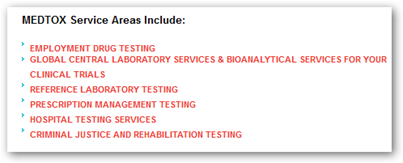
“MEDTOX operates a SAMHSA-certified drug testing laboratory, a CAP and CLIA-certified clinical laboratory and a diagnostic division which is an FDA registered establishment. Our comprehensive laboratory and diagnostic testing services coupled with our commitment to excellent customer service ensures that our clients' testing programs operate as efficiently and effectively as possible. We are committed to building strong relationships with our clients; being responsive to their questions and adaptable to their needs.”

image


BURLINGTON, N.C., Jun 04, 2012 (BUSINESS WIRE) -- Laboratory Corporation of America(R) Holdings LH +1.10% and MEDTOX Scientific, Inc. MTOX +0.19% , a provider of high quality specialized laboratory testing services and on-site/point-of-collection testing (POCT) devices, today announced that they had entered into a definitive merger agreement under which LabCorp would acquire MEDTOX for a purchase price of $27.00 per share in cash, representing a total enterprise value of approximately $241,000,000. The board of directors of MEDTOX unanimously approved the agreement and recommended approval of the transaction by MEDTOX's shareholders.

http://www.marketwatch.com/story/labcorp-announces-agreement-to-acquire-medtox-scientific-2012-06-04

Johnson and Johnson Diabetes Drug Canagliflozin Manages Blood Sugar Levels in a New Way

This is a new drug said to give Merck some competition imagebut there needs to be a little more data on side effects the article states.  Sugar is sent from the body through urination which doesn’t’ normally happen until high glucose levels are reached.  J and J has filed for regulatory clearance to sell the drug in the US. 

Some MDs are cautious with the results and use so far as the drug is basically using a “side effect” as a treatment.  In other words when glucose levels become high the body will send out via urination, but from what I read here this somewhat puts the body on a schedule to release sugar whether the levels are extremely high or just relatively high or maybe not at all? 
Patients with kidney disease still need more studies as it is not known if the drug will represent any issues for them.  So far the biggest side effect is bacterial or fungal infections from having a urinary tract flooded with glucose all the time.

Frequent trips to the bathroom could also be a side effect so we don’t want to add to this and get another drug that is sold to stop incontinence since this drug is designed to do that as part of the treatment, so anyone with over active bladder might not be a good candidate for this drug.  BD


Johnson & Johnson (JNJ)
has turned one of diabetes’ most worrisome warning signs into a treatment that lowers dangerously high levels of blood-sugar before the disease can cause blindness, kidney damage and heart disease.

The demand for novel diabetes drugs is soaring as rising imageobesity rates push the condition to epidemic levels, affecting nearly 347 million people worldwide. While 10 different types of drugs are sold to treat diabetes, physicians still struggle to control their patients’ blood-sugar levels.

The novel strategy developed by J&J sheds sugar through the urine, after it’s filtered from the blood by the kidneys and before it can be reabsorbed into the body.

“Using a side effect of uncontrolled diabetes as a primary mode of treatment is unconventional, to say the least,” said Adrian Vella, an endocrinologist at the Mayo Clinic in Rochester, Minnesota, by telephone. “We still need to understand how severe and how frequent the potential side effects associated with these medications are.”

http://www.bloomberg.com/news/2012-06-08/j-j-diabetes-drug-seen-challenging-merck-s-market-leader-health.html

Wednesday, June 6, 2012

Medicare to Cover Rosetta Genomics Diagnostic Test To Find Cancer of the Unknown Primary

It’s about time for this test to be covered as it is important.  Way back in January of 2009 I interviewed the CCO of Rosetta and he imageexplained what this test is.  You may have cancer in your lung for example, but it may not have originated there and this test will be able to identify if it by chance came from somewhere else in your body, which makes a huge difference with treatments as one medication that treats lung cancer may be quite different from one that treats let’s say kidney cancer for an example.  Lab results can be done in 10 days or less.  You can read my original interview below for more information. 

Rosetta Genomics Interview – microRNA for Diagnosing Lung Cancer Tumors

Also, what is also unique is the fact that Rosetta’s tests use Formalin Fixed Paraffin Embedded (FFPE) tissue samples, whereby the tissue is saved in a container that does not require any type of special care other than room temperature and the lab can use the 3-10 slices to extract the microRNA without any additional issues for a physician to deal with
.
By knowing quickly and accurately the origin of the metastases, doctors can come up with a guided treatment plan and remove much of the trial and error with drugs and choose therapies that are specifically targeted for the type of cancer to be treated.


Rosetta works with MicroRNA and has a data base that goes back to the year 2000.    MicroRNAs are now being considered “The Master Switch of the Body”, Mr. Tamir stated, and by determining the level of expression of specific MicroRNAs, we can make diagnostic decisions.  BD  

Rosetta Genomics Ltd. (NASDAQ: ROSG)announced that Novitas, the designated Medicare Administrative Contractor for the Company’s miRview(R) mets^2 assay, has informed Rosetta that it plans to cover this assay for all Medicare beneficiaries. MiRview(R) mets^2 accurately identifies the primary tumor of origin in primary and metastatic cancer including Cancer of Unknown or Uncertain Primary (“CUP”).

The policy will cover the 45 million Medicare beneficiaries and will enable Rosetta to provide the miRview(R) mets2 assay for Medicare beneficiaries throughout the U.S. at no cost to the patient, thereby eliminating an adoption barrier for the physician ordering the test and for the patient. miRview(R)

Products are a series of microRNA-based diagnostic products offered by Rosetta Genomics. miRview(R) mets and miRview(R) mets^2 accurately identify the primary tumor type in primary and metastatic cancer including Cancer of Unknown Primary (CUP). miRview(R) squamous accurately identifies the squamous subtype of non-small cell lung cancer, which carries an increased risk of severe or fatal internal bleeding and poor response to treatment for certain therapies. miRview(R) meso diagnoses mesothelioma, a cancer connected to asbestos exposure. miRview(R) lung accurately identifies the four main subtypes of lung cancer using small amounts of tumor cells.

miRview(R) kidney accurately classifies the four most common kidney tumors: Clear Cell Renal Cell Carcinoma (RCC), Papillary RCC, Chromophobe RCC and Oncocytoma. miRview(R) tests are designed to provide objective diagnostic data; it is the treating physician’s responsibility to diagnose and administer the appropriate treatment. In the U.S. alone, Rosetta Genomics estimates that 200,000 patients a year may benefit from the miRview(R) mets and miRview(R) mets^2 test, 60,000 from miRview(R) squamous, 60,000 from miRview(R) meso, 54,000 from miRview(R) kidney and more than 1 million patients worldwide from miRview(R) lung.


http://www.bioisrael.com/medicare-to-cover-rosetta-genomics-cancer-diagnostic

Complete Genomics To Lay Off 20 Percent of It’s Workforce And Could Sell the Company

Back in 2008 Complete Genomics was the leader in bringing down the cost of sequencing with their “wholesale” approach and with today’s standards there’s a whole lot of competition out there.  BD 

Complete Genomics Inc. said Tuesday that it's laying off about 20 percent of its workforce in order to cut costs and has hired a financial adviser to help it explore "strategic options," including a possible sale of the company.

The company, based in Mountain View, Calif., sells technology that can sequence human DNA for research purposes. It said it plans to focus on developing clinical applications for its whole human genome sequencing service, while continuing to provide genomes to research customers.

Most of Complete Genomics' job cuts are expected to take place during the current quarter, which ends on June 30. The company estimated its restructuring and related costs at about $1.5 million, which includes severance pay for the workers whose jobs are being eliminated.

http://www.businessweek.com/ap/2012-06/D9V6VDI80.htm

Novartis Recalls Birth Control Pills–Packaging Error With the Peach and White Pills–Where’s Those Bar Codes to Make This Process Easier?

Here we go again and it’s been over 2 years since I started my little campaign and still no bar codes for FDA recalls?  What’s it going to take?  Folks on Twitter liked the idea and it’s good for prescriptions, over the counter and medical devices too.  Not all hospitals and small surgical centers have a sophisticated system and consumers would like to have this option, it was a winner hands down on the poll I did. 

YOU CAN STILL VOTE FOR BAR CODES TO USE WITH RECALLS AND IF YOU RAD A LITTLE FURTHER HERE, IT SOVLES A LOT OF OTHER ISSUES LIKE FINDING STOLEN DRUGS TOO.  ONE TECHNOLOGY CAN SOLVE A LOT OF EVILS!   Read the article below on how a man died being implanted with a device that had been recalled but was missed being pulled from inventory.
image image


Micro-Cap FDA Recalls Never End


The recall involves a birth-control pill called Introvale that is marketed by Sandoz. The product contains 84 active pills that are peach colored and seven inactive pills in week 13 that are white.

FDA said the recall, which affects 10 lots distributed between January and May 2012, was prompted by a consumer report of the inactive pills being located in the row labeled week nine.

"While the white placebo tablets can be clearly distinguished from the peach-colored active tablets, the risk of an unintended pregnancy for a patient taking the wrong tablet over several days cannot be excluded," FDA said.image

The lot numbers involved in the recall are as follows: LF00478C, LF00479C, LF00551C, LF00552C, LF00687C, LF00688C, LF00763C, LF00764C, LF00765C and LF01261C. It is not clear how many packages were impacted by the error. A Sandoz spokesman didn't immediately return a request for comment left late Wednesday.


http://www.foxbusiness.com/news/2012/06/06/fda-novartis-unit-recalling-introvale-birth-control-pills/

Tuesday, June 5, 2012

Juan Enriquez–Will Our Kids Be a Different Species–In Other Words Are We Evolving in Real Time


Juan Enriquez is a fascinating person to listen to as he has gone the gambit with Craig Venter, who you may or may not be aware of,image but his creation of synthetic cells is all over the news from time to time.  Juan states and emphasizes how “fast” this is all moving and it really is.  Actually back in December of 2010, this was the big announcement made by Venter and he too is a guest on several of the TED conventions.  The group also includes current NIH Director, Francis Collins when it comes to “cracking the code”. 

Synthetic Life Announced by Craig Venter–All About the Code and Sequencing the Genome

He tackles some interesting topics here and a lot of it comes back to the massive amounts of information we handle today and quips a bit about a brain upgrade, listen and see what that is all about.


Juan Enriquez–Will our Kids be the same species


Throughout human evolution, multiple versions of humans co-existed. Could we be mid-upgrade now? At TEDxSummit, Juan Enriquez sweeps across time and space to bring us to the present moment -- and shows how technology is revealing evidence that suggests rapid evolution may be under way.


Here’s yet one more TED video from Juan, more specific on synthetic genetics.  We are generating “life” code much faster than we can build computers to store it.  Software makes it’s own hardware.  How and where we make stuff is changing and it’s all in Life Sciences in everything from farming to creating a drug or vaccine.  The chart below shows how drugs were being discovered in the 50s to where we are now with dollars spent.  As you can see the number is way down as the cost and research and development is so high.  He asks that maybe we are killing more people with regulation than saving and where is the “cross over” point.  He advocates the cost of measuring versus not measuring.  BD 

image

Harnessing Synthetic Genetics–Solve for X–Digital Code and Life Code


http://www.youtube.com/watch?v=Syi9bqfFIdY

http://www.youtube.com/watch?v=PzSXTWhBUD0

Why are Scientists Not Using More “Math” to Determine How Cancer Grows and Mutates? TEDMED Video

Instead of rushing to use humans immediately in clinical trials, imagemodel it with math and computer code.  This is not a new idea as Bill Gates invested in a company a couple years ago, Schrodinger, that does just that.  A lot of work can be done on computers before a “wet lab” is ever set up.  As she states, this will not give us all the answers but we have the potential of having a lot more information up front using math if we use it.

Bill Gates Invests In Software Company That Predicts and Helps Generate Creating New Drugs


Reuters had an article out today about how doctors try to make sense of the genetic jumble with cancer too.  If you followed ASCO this year we are starting indeed to see some of this, namely with changing how breast cancer and melanoma are treated.  The answers lie within math and genetics with the behaviors of the targets. 

She had a great background here with her mother being a nurse and her father being a mathematician and thus the idea of combining knowledge from both side to attack cancer.  She suggests using computational biology to combine the two.  She says it’s weird that we don’t have more math being used in the battle of cancer.  BD 

Using Math to Determine How Cancer Grows and Invades

Why aren't scientists using math to decipher how cancer grows and mutates? Fanziska Michor of the Dana-Farber Cancer Institute applies computational biology to crack cancer's code.

image

Dr. Franziska Michor is an Associate Professor of Computational Biology in the Department of Biostatistics and Computational Biology at the Dana-Farber Cancer Institute, and in the Department of Biostatistics at the Harvard School of Public Health.

http://www.tedmed.com/videos-info?name=Franziska_Michor_at_TEDMED2012&q=updated&year=all

Monday, June 4, 2012

Melanoma Drugs Extending Lives and Working Better Than Chemotherapy–Focus at ASCO

Another targeted melanoma therapy also image from GlaxoSmithkline, dabrafenib , was tested against chemotherapy among 345 patients with inoperable late-stage melanomas and it also targets the BRAF gene.  It stopped growth for around half of those taking it.  There could be a potential of combining both dabrafenib and trametinib for a potential therapy. 
Briston Myers also has a treatment that gets the immune system to to fight cancer, Yervoy.  You can also read the abstract from ASCO with further details here.  Glaxo will be applying to the FDA for approval.  This is a real game changer with treating melanoma for sure as it is doing better than just straight chemotherapy.  The next issue will be the cost and how affordable treatments will be. 


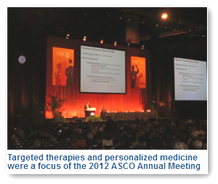
This year had some major breakthroughs for cancer at ASCO.  The big focus is in the immune system where the body with targeted therapies helping, shrink the tumors.  All the hard work and research is finally beginning to pay off.  BD 

Visit msnbc.com for breaking news, world news, and news about the economy


CHICAGO — A new type of drug prolonged the lives of patients with advanced melanoma in a clinical trial, potentially adding to a growing number of therapies for a disease that was once nearly untreatable.

“In melanoma, we are living something incredible,”

Dr. Caroline Robert, lead investigator of the study, said after a news conference Sunday at the American Society of Clinical Oncology meeting here.

The new drug, GlaxoSmithKline’s trametinib, also kept the disease from worsening longer than chemotherapy did, said Dr. Robert, who is the head of dermatology at the Institut Gustave Roussy in Villejuif, France.

After six months, 81 percent of those in the trametinib group were alive compared with 67 percent of those in the chemotherapy group. The survival advantage was found even though nearly half the chemotherapy patients switched to trametinib once their disease started to worsen.

http://www.nytimes.com/2012/06/04/health/glaxosmithkline-melanoma-drug-prolongs-patients-lives.html?smid=tw-nytimeshealth&seid=auto

Why Chemotherapy Fails–Weizmann Institute Discusses Why Leukemia Often Returns

Being this is the week of ASCO and the fact that I am catching up after my move this is a good time to see what the Weizmann Institute says about Leukemia.  Chemotherapy alone is not able to cure and drugs are needed to supplement and attempt to eradicate. BD

Press Release:


REHOVOT, ISRAEL—May 29, 2012—The fight against cancer is not won in a single battle: long after a cancer has been beaten into imageremission, it can return. The reason for this is under debate, and much is unclear. New research led by Weizmann Institute scientists shows that, at least for one type of blood cancer, the source of cancer recurrence is in a set of cells that do not proliferate as quickly as regular cancer cells, and thus are able to survive chemotherapy. The findings, which appear in the journal Blood, have some important implications for the future of the war on cancer.

Cancer involves a breakdown in the mechanism that regulates the pace of cell division. When this happens, cells divide rapidly, leading to unchecked growth that overruns the body. The most common chemotherapy drugs are those which specifically attack cells that are undergoing rapid division, and these, indeed, often destroy all the cancer and cure the patient.

But there are also quite a few leukemia patients who go through chemotherapy only to have the cancer return. Why does this happen? Several explanations have been proposed. One is that the chemotherapy does not kill every last cancer cell, leaving a few to continue dividing out of control until the disease returns in full force. A second explanation proposes that chemotherapy does get all the regular cancer cells, but there is another type of cancer cell that hides in the body. As opposed to the rapidly dividing majority of cancer cells, these undergo slow division, enabling them to evade the chemotherapy drugs. These insidious cells can give rise to new, rapidly dividing cancer cells, which is why they are known as “cancer stem cells.”

Which explanation is correct? The debate is an important one because, if the first explanation holds true, improving upon the existing treatments might help, while the second implies that a completely different approach to treatment will be needed to root out the slowly dividing cancer stem cells.

To attempt to resolve the debate, the team of Prof. Ehud Shapiro of the Weizmann Institute’s Department of Biological Chemistry and Department of Applied Mathematics and Computer Sciences worked with scientists and physicians from Rambam Medical Center and the Technion, both in Haifa. They used a method of reconstructing cell lineage trees that has been developed over the past few years in Prof. Shapiro’s lab. This method is based on the fact that the genetic material in different body cells accumulates unique mutations during cell division, and these mutations are passed on to daughter cells during cell division. By comparing mutations, one can map out cells’ detailed family trees, and thus determine how far back they share a common ancestor. The end product of this analysis is a tree that reconstructs the genealogy of the cells from their earliest forebears at the base of the tree to the youngest cells at the tips of the branches.

To reconstruct the cancer cell lineage tree, the team used two sets of blood samples: the first taken from leukemia patients right after the disease was diagnosed, and the second from patients who had undergone chemotherapy and in whom the cancer had returned. The researchers could then trace the relationships of the recurring cancer cells back to see if they descended from the original cancer cells. The lineage tree showed that, at least in some of the patients, the source of the renewed cancer was not in the rapidly proliferating cancer cells, but rather in cells that were close to the root of the tree. These cells had only divided a few times. In other words, the cancer arose from cells that divide very slowly, making them resistant to the attacks of chemotherapy drugs.

Prof. Shapiro says, “We know that in many cases, chemotherapy alone is not able to cure leukemia. Our results suggest that to completely eliminate it, we must look for a treatment that will not only eliminate the rapidly dividing cells, but also target the cancer stem cells that are resistant to conventional treatment.”

Participating in the research were Dr. Liran Shlush of the Technion’s Rappaport Faculty of Medicine and Rambam Medical Center; Noa Chapal-Ilani and Dr. Rivka Adar of the Weizmann Institute; Profs. Karl Skorecki and Jacob Rowe of the Technion; Dr. Tsila Zuckerman of Rambam and the Technion; and additional investigators.

Prof. Ehud Shapiro’s research is supported by the Paul Sparr Foundation; Miel de Botton, UK; the Carolito Stiftung; and the European Research Council. Prof. Shapiro is the incumbent of the Harry Weinrebe Professorial Chair of Computer Science and Biology. His research is also supported by an ERC Advanced Grant.

Wal-Mart Clinics Go Live In the Cloud with Smart Care Doc–Telemedicine

I went to the Smart Care Doc and so far it looks as though there is one in Pennsylvania that is on board so far.  A registered nurse greets the patient and guides them through the process.  The doctor comes on line via the screen and conducts a medical visit.  The site also has a listing of the conditions the clinic can treat.  The video below does a short walk through.  You can see the patient using the devices and a medical record is created and the patient has access and can get a copy on the way out.

WalMart Clinic


The charge for the visit is $59.00, and that is the cash price and the site states that actual charges submitted to insurance companies may vary.  BD


Dubbed Smart Care Doc, this technology, provided by BCS Global Networks Limited and Telemed Ventures, will enableimage remote video consultations between a patient and doctor through a virtual face-to-face video interface, over a secure video network. Users of the service have the ability to conduct telepresence-quality face-to-face interactions over the Internet using existing laptops, smartphones or tablets – making it a very affordable and accessibly solution for patients, doctors and healthcare providers.

Patients receive all the benefits of a traditional doctor’s visit that they've come to expect: the ability to seeimage a doctor instead of a less experienced practitioner, engaging the doctor in a face-to-face dialogue about medical issues, predictable/transparent pricing options, and the accurate acquisition of vitals and health information.

http://www.healthcareitnews.com/news/walmart-roll-out-cloud

Medical Marijuana Is Now Legal In Connecticut–17th State to Legalize

The law is a little different than in most states as pharmacists will be providing it, that is after they have been certified.  There’s a limit on that as well to having at least 3 but no more than 10 certified in the state so nobody will be growing their own.

Patients will need to register and doctors will need to certifyimage the medical need for the medical marijuana which is pretty much uniform in all states where it is legal.  We have pot cards in California for example.  I wonder how long before the feds kick in here and stop the crazy battle that still exists over whether or not it is legal or not.  Maybe we need a few more states to join in?  BD


On Friday, Connecticut became the 17th state in America to legalize the use of marijuana for medical purposes. Governor Dannel Malloy signed the groundbreaking legislation that will allow licensed physicians to certify and prescribe medical marijuana for adult patients will qualifying medical conditions.

“For years, we’ve heard from so many patients with chronic diseases who undergo treatments like chemotherapy or radiation and are denied the palliative benefits that medical marijuana would provide,” Governor Malloy said

”With careful regulation and safeguards, this law will allow a doctor and a patient to decide what is in that patient’s best interest,” he said.

http://www.care2.com/causes/medical-marijuana-is-now-legal-in-connecticut.html