Showing posts with label Microsoft/Windows News. Show all posts

Thursday, June 21, 2012

Microsoft Back in the Tablet Business With Their Own “Surface” Units Coming Soon

I do have to say from what I have seen the new Surface Tablets certainly look good and I’ll have to revive and add more to the “Tablet” sectionimage of this blog.  I was one of the very first adopters of a tablet computer and I think that goes back to around 2001.  It’s been a long time and I currently have an Acer Windows Tablet.  The only thing that it lacks is enough battery life to make me happy but you can’t have everything.  I still have this particular tablet as well from Tablet Kiosk and you see it regularly on CSI New York, except they use a black one. 



Sahara Slate Tablet PC i440D From TabletKiosk with Core 2 Duo available to order – Sunlight Display included as a standard feature….
Sahara Tablet PC Graphics and Dictation


Way back when I was still writing my medical records program I had it working with tablets too and the tip input bar.  In 2008 I ranimage around HMMS with my tablet and One Note and in those days one was considered a “goober” if you had it in tote as most vendors only showed and used them in the booths:)  Today all that has changed but the article below is still very applicable on using One Note as “intelligence files” and really work a convention and get everything covered that you set out to do.  I did it and had everything I needed and One Note did the queries for my information both before and at the show.  I talked and wrote my notes in One Note.  Everyone kept coming up and asking me what booth others were in as I had that too":)  Just think this is only 4 years later and how far we have come with tablets.  You can see a sample image as to how my rough files looked before I began with all the notes I took. 
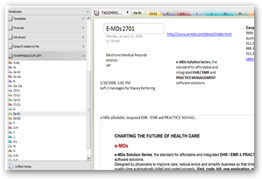
 
HIMMS 2008 Summary - Getting organized is the trick

The little Acer Arconia does ok for what I need now but it’s not a digitizer and I do miss that with having the option to be touch or a full digitizer on the unit, and my TabletKiosk model does both and I can switch back and forth.  If you have not caught a video of the new Surface Tablet you can view it below.  I’m one of the founding members of the Los Angeles Windows Mobile Group (Pocket PC) which has undergone a few other name changes tooimage and I remember the one night back in Santa Monica at our meeting at Microsoft where we all got to see one of the first tablets previewed even before they were released and a special employee from Microsoft arrived to give us the unannounced prior presentation. I just wrote to a Microsoft Tablet MVP who made a video of it to see if he could dig it out for nostalgia purposes:)  The video quality is not what we have today but seeing this from 2001 would be fun to look back at.   I’ve mobile before it was cool to be mobile and Pocket PCs were not phones yet:)

I did the mini UMPC round of tablets as well and this is one of my clients, a doctor a few years back using the small imagetablet to enter data in his medical records program in 2007.  At any rate I hope before too long that I am able to get my hands on one of the Surface units and really check it out.  Little humor, this is far cry from a Mike Arrington Crunch Pad for those that remember:)  It’s been a while so time for a little friendly reminder of the project. For your absolute utter enjoyment here’s a picture of a couple of tablets running my antiquated VB6 medical records system, although it was hot at the time and your screens could be any color you wanted:) If that picture did anything for you, there’s more at this link of some screenshots of the antiquated coder/blogger at work.  Boy the formatting was tough to get right for the little tablet. 
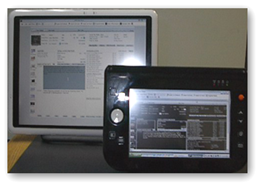
What Does an Antiquated EMR (Electronic Record System) Look Like


The bigger unit with the Intel processor looks like the real imagework horse and of course I will be interested to see what battery life is like as for years it seem as if you want more power you get less battery and even the IPAD with it’s wonderful engineering only does one program at a time and that’s how the battery can last so long.  They really did a good job on that design, however let’s see what Surface can do and for sure it stands to be a huge tool for the enterprise and healthcare world with medical records.  Tablets have come such a long way since that first little Acer I had years ago.  BD 


Surface Tablet Video


http://www.youtube.com/watch?v=dpzu3HM2CIo&feature=player_embedded

Wednesday, June 20, 2012

Greenway PrimeSUITE Medical Records Integrates With Microsoft HealthVault

The Greenway EHR medical records system is basedimage on Microsoft .NET technologies so this makes sense to combine the technologies and Greenway is also a Microsoft Gold Partner so the relationship with their technologies has been long standing with remote access available for physicians with the EHR  and for the patients via a portal .

PrimeSUITE is the name of the medical records system that is certified and falls under the stimulus rules that allows doctors to collect imageincentives for installing and using the system.  PrimePATIENT is the portion where patients can access their medical information via the portal.  It appears the integration makes the process quite simple with both the patient and physician establishing their own HealthVault accounts.  A Continuity of Care standard is used to import records into HealthVault. 
The nice part about the integration here is that the patient maintains control over what is shared and what information they want in their PHR.  The PrimePATIENT portal already allows patients to go online to schedule appointments, pay bills and request refills on prescriptions.  As always I have a link to Microsoft HealthVault on this site to make it easy to learn more and there’s an entire section at the Medical Quack that covers a ton of information on PHRs with over 400 blog posts and you can read more here.  You can also search the Medical Quack just by using the keyword “HealthVault” and there’s ton of posts that will come up for additional information. 

HealthVault also allows a patient to store images in their account

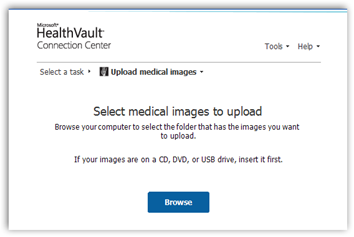
and you can read more at the link below on how this works with an “image reader” included with the desktop software.  The value here is let’s say you recently had some imaging screening or testing completed, once stored in your HealthVault account the patient has the option to share with their doctor and it’s all stored in the Azure cloud. 

HealthVault Begins Storing Medical Images (Dicom) Using Windows Azure Cloud Services With Full Encryption

imageIt’s also worth mentioning that the HealthVault connector works on the Windows Phone as well so mobility and access are all present.  As mentioned above, this makes sense as Greenway is built on Microsoft technologies.  BD


CARROLLTON, Ga.--(EON: Enhanced Online News)--Greenway Medical Technologies, Inc., today announced pilot integration of Microsoft HealthVault data aggregation and mobility to providers utilizing the company’s electronic health record (EHR), practice management and interoperability solution PrimeSUITE®.

Through PrimeSUITE’s integrated and secure online portal, PrimePATIENT®, patients can create and access a HealthVault account to gather, store and manage centralized and sharable health information.

The combined data is sharable with other providers regardless of EHR systems if HealthVault integration is also present, or through permissible PrimeSUITE data exchange directly into EHRs and health information exchanges.

http://www.greenwaymedical.com/solutions/prime-suite/

Thursday, June 14, 2012

WellPoint Completes Migration to Microsoft Office 365 In the Cloud With 65,000 Mailboxes

In addition you can also visit the Microsoft In Health Blog to read more to include a interview as to how and what influenced WellPoint imageto choose Office 365.  In addition this makes more room for using Share Point for collaboration efforts as well as having video and other capabilities that are built into Office 365.  If you ever had to monitor and take care of Exchange on a client/server operation, then you will appreciate cloud services for sure. 

With 65,000 mailboxes you can bet the IT folks were happy to have  this come along.  I don’t know how many of the opt in services are included but having connectivity with social networks is also a huge help and this could give more time to the IT folks to work on their “risk” business intelligence items which are always at hand with insurance companies. 

In addition Blue Cross has a bit of money tied up with their own BI ventures which you can read about at the link below as the parent company moved to San Francisco to start yet one more incubator.  BD
   
Blue Cross Venture - Blue Health Intelligence Proving to Be Very Costly And Received Another 9 Billion From Undisclosed Source–Subsidiary Watch


Press Release:

REDMOND, Wash., and INDIANAPOLIS, Ind. — June 14, 2012 — WellPoint Inc. and Microsoft Corp. today announced WellPoint’s completed migration to the cloud that includes its internal imageproductivity platform and more than 65,000 email boxes. WellPoint collaborated with Microsoft to deploy Microsoft Office 365, which allows associates to collaborate in a virtual environment, share desktop screen views, host virtual meetings, instant message and streamline communications. This yearlong process included a multiphase migration to the cloud environment. Office 365 allows the more than 37,000 WellPoint associates to communicate via chat, video and audio.

WellPoint’s affiliated health plans serve nearly 34 million members, more than 62 million people through subsidiaries, and are continuously working to improve the customer experience. The collaboration with Microsoft is expected to provide the support needed to help give customers the best service in the industry. When associates can communicate in a collaborative, efficient manner, customers receive prompt, efficient service.

WellPoint is working toward more coordinated care management delivery for customers, which includes access to the latest medical evidence and accurate and complete member information contained within a security-enhanced cloud environment. This technology serves as the foundation for WellPoint’s internal communications, with WellPoint’s goal to eventually offer the same collaborative communications to affiliated health plan providers and customers.

“We are leveraging the cloud and Office 365 to achieve new levels of collaboration internally,” said Andrew J. Lang, senior vice president and chief information officer, WellPoint Inc. “Our next step is to enhance our collaborative communication capabilities to our affiliated health plan members and our health care plan provider partners by enabling solutions that help in improving the coordination of care.”

“In today’s hypercompetitive marketplace, health plans must focus their limited resources where they matter most — empowering people and teams to deliver exceptional customer experiences, be more productive, and respond quickly to change and opportunities,” said Dennis Schmuland, chief health strategy officer, U.S. Health and Life Sciences, Microsoft. “For WellPoint and other health benefit organizations, an always up-to-date cloud service such as Office 365 offers the agility to respond quickly to change and opportunities, and by substantially reducing IT operating costs, it frees resources for more strategic uses.”

About WellPoint Inc.

At WellPoint (NYSE: WLP), we believe there is an important connection between our members’ health and well-being—and the value we bring our customers and shareholders. So each day we work to improve the health of our members and their communities. And, we can make a real difference since we have nearly 34 million people in our branded health plans, and more than 62 million people served through our subsidiaries. As an independent licensee of the Blue Cross and Blue Shield Association, WellPoint serves members as the Blue Cross licensee for California; the Blue Cross and Blue Shield licensee for Colorado, Connecticut, Georgia, Indiana, Kentucky, Maine, Missouri (excluding 30 counties in the Kansas City area), Nevada, New Hampshire, New York (as the Blue Cross Blue Shield licensee in 10 New York City metropolitan and surrounding counties and as the Blue Cross or Blue Cross Blue Shield licensee in selected upstate counties only), Ohio, Virginia (excluding the Northern Virginia suburbs of Washington, D.C.), and Wisconsin. In a majority of these service areas, WellPoint’s plans do business as Anthem Blue Cross, Anthem Blue Cross and Blue Shield, Blue Cross and Blue Shield of Georgia and Empire Blue Cross Blue Shield, or Empire Blue Cross (in the New York service areas). WellPoint also serves customers throughout the country as UniCare and in certain California, Arizona and Nevada markets through our CareMore subsidiary. Additional information about WellPoint is available at www.wellpoint.com

About Microsoft in Health

Microsoft is committed to improving health around the world through software innovation. For over 16 years, Microsoft has been providing a broad portfolio of technologies and collaborating with partners worldwide to deliver solutions that address the challenges of healthcare providers, public health and social services, payers, life sciences organizations and consumers. Today, Microsoft invests in technology innovation and works with health organizations, communities and over 20,000 partners around the world to make a real impact on the quality of healthcare.

About Microsoft

Founded in 1975, Microsoft (Nasdaq “MSFT”) is the worldwide leader in software, services and solutions that help people and businesses realize their full potential.

Note to editors: For more information, news and perspectives from Microsoft, please visit the Microsoft News Center at http://www.microsoft.com/news. Web links, telephone numbers and titles were correct at time of publication, but may have changed. For additional assistance, journalists and analysts may contact Microsoft’s Rapid Response Team or other appropriate contacts listed at http://www.microsoft.com/news/contactpr.mspx.

Wednesday, June 13, 2012

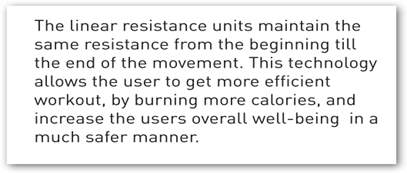
A New Way to Work Out with Kinect–Kinvestix Belt Provides Resistance–No Need to Wear Weights

imageI recently attended the Israel Conference in Los Angeles and as like last year the amount of brains and technology all in one small place is astounding and my brain hurt when I left.   I spoke with the folks at Kinvestix and if you read here at the Medical Quack then you have seen all kinds of posts relative to what Kinect does and what it can do from surgical procedures to peeling a grape. 

I spoke with imageAsaf Manor about how it works and it kind of looked like fun.  Not having to wear “actual weights” is a big plus and it can be a bit safer in not injuring yourself as well.   The company was featured at the MicrosoftrndIsrael recently.  When you watch the video there are placements are are definitely for the male users <grin>. 

It looks as if you can get a full gym workout with the gym and getimage some entertainment at the same time.  These kind of games are fine with me and beat the heck out of those that gather and sell your data online.    
image
I also spoke with a 3D printing company at the Israel Conference who just announced merging with a US company that does the same thing and was able to actually see on of those 3D printing machines.  Read more about Object here.  BD 
Kinvestix

image

Sunday, June 10, 2012

Microsoft Files Patent Which Would Allow Kinect to Figure Out Your Mood for Advertising Purposes But No Indications of Rolling Out the Technology

Microsoft has a ton of patents and if one were to really imagesee how many of them are really put into action I would imagine the ones that are not would certainly outnumber those that are in practice.  I’ve written about some that to my best knowledge have never seen the light of day.  On the plus side of this is the fact that “they” have the patent before some small start up rolls it out and I feel a little better with the Softies having the patent.  We see that not only with Microsoft but Apple and other big tech companies. 

Then again it could be something for use down the road as we just don’t know how things are going to evolve throughout the web and technology but with all the focus on predictive behaviors the research folks at Microsoft are dialed in to be ready for almost any tech battle ground whether it is needed or not.  Many of the folks in healthcare though with their psychological analytics with predictive behavior though do make me uneasy though and I see some out there creating some of these types of analytics just for the sake of selling more software.  BD


A while back we reported about a Microsoft patent application for a system that would scan your posts on Facebook and other social media (with your permission, presumably) to deduce your mood, interests, and possibly even your intelligence, to help deliver search results more suited to you.

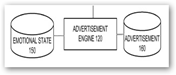
A different Microsoft patent application, made public this week, proposes targeting ads to users based on their emotional state at any given point.

The application was originally filed in December 2010 and made public this past week, on June 7. As with most of these things, there’s no indication that the company actually plans to roll this out. But it provides a glimpse into the mindset of Microsoft’s engineers as they contemplate future products.

http://www.geekwire.com/2012/happy-sad-microsoft-system-target-ads-based-emotional-state/

Tuesday, June 5, 2012

National Kidney Registry Migrated to Microsoft Azure Cloud–Significantly Boosting Speed With Multiple Matching Capabilities For Paired Transplantation Candidates

When you visit the website it shows 464 transplants facilitated to date.  With the new Azure cloud service the matching capacity has increased 400% which is a deeper and heavier search that can end up finding kidneys faster for those in need of the life saving transplant.  This is great and shows how the cloud can serve to improve and create solutions in healthcare.  BD 

Press Release:

The National Kidney Registry’s new SMELAC matching system has been successfully migrated to Microsoft’s Windows Azure cloud computing platform, significantly boostingimage paired exchange match processing speeds. The announcement was made at the American Transplant Congress in Boston last night at the 4th Annual National Kidney Registry Awards Event by Garet Hil, CEO of the National Kidney Registry and Wes Anderson, Microsoft’s Vice President of Public Sector Services.image

The Windows Azure cloud computing platform has increased National Kidney Registry’s matching capacity by 400% allowing multiple match runs to execute simultaneously. Already the world leader in paired exchange transplantation, the ability to execute multiple match runs simultaneously will enhance the National Kidney Registry’s ability to facilitate even more paired exchange transplants.


In describing the significance of this breakthrough, Mr. Wes Anderson, Vice President for U.S. Public Sector Services at Microsoft said, “The National Kidney Registry team realized early-on that scaling their success in kidney matching requires variable computing capability that may grow exponentially at very short notice, presenting important imageconditions for moving back-end processes to a cloud-based solution. By fully leveraging Windows Azure, the National Kidney Registry is continuing its amazing work of helping to provide a long and normal life for the ultimate benefactors of this endeavor – those among us who need the help of the community to overcome end-stage renal disease”.

 

Mr. Hil added, “Microsoft imagecontinues to provide valuable technical support as we continue to grow our program. The migration to Azure is the latest advance that is allowing our computing capacity to scale up as our pool of incompatible pairs expands”.


Expanding on the importance of this latest technology advance, Dr. Marc Melcher, transplant surgeon at Stanford University andimage Research Director for National Kidney Registry said, “More and more transplant centers are using kidney paired exchange transplantation to help their patients in kidney failure, and the computational power required to support the sophisticated matching algorithms that sift through and evaluate all the potential matches has been growing exponentially”.

About the National Kidney Registry

The National Kidney Registry www.kidneyregistry.org is the leader in paired exchange transplantation and has facilitated more paired exchange transplants than any other organization in the world. The National Kidney Registry is a nonprofit organization with the mission to save and improve the lives of people facing kidney failure by increasing the quality, speed, and number of living donor transplants.

AARP and Microsoft HealthVault Connect Personal Health Records

If you read here often enough then you know I have a complete section on PHRs (personal health records) and now AARP is also connecting to Microsoft HealthVault.  The PHR is provided free of charge and when you take a look at the FAQ page additional instructions are given on how to get started. 

The “sharing” portion of the medical records all takes place via HealthVault.  You are also free to create and establish your own PHR directly with HealthVault as well.  imageInteresting on the FAQ page about signing in with Facebook connect…in my own personal use, I use my own sign on but the question is answered here with using that specific log on.  One more item worth noting is that you can also store medical images in HealthVault and it has a nice handy Dicom viewer too. 

HealthVault Begins Storing Medical Images (Dicom) Using Windows Azure Cloud Services With Full Encryption

Multi-Media Data Sharing Comes to HealthVault PHR–Store and Share Your Endoscopic Videos From Physicians
 

As always the Medical Quack provides a link to HealthVault to get started and read additional information on how it all works. Just look under the resources area for more information and you can also check out the over 400 posts I have with a full history on PHRs here.  BD 


Press Release:


WASHINGTON — June 5, 2012 AARP and Microsoft Corp. today announced the launch of AARP Health Record, a security-enhanced online service designed to help people over 50 manage and improve their health.  This new tool enables users to enter, store and edit their personal health information in a central location and to share it selectively with caregivers, family members, doctors and other healthcare providers.


Health Record, which is free to AARP members, makes it easy to create and maintain security-enhanced, up-to-date electronic records that can be accessed from an Internet connection. By storing all of their health information in one location, members can partner more effectively with their doctors and other healthcare providers, be better prepared for emergencies and reduce wasteful and redundant paperwork.


“AARP Health Record is designed to help our members better manage their health so they can focus on the things they care about most — enjoying the happiness and peace of mind that comes from living life to the fullest.” said AARP Vice President Nicole Duritz. “In today’s digital environment, AARP Health Record is the right resource at the right time.”


AARP Health Record will focus on giving AARP members a convenient way to track and manage basic health information, such as blood type, drug allergies, medications, and personal and family health history as well as emergency and provider contact information. Users can also print and carry an easy-to-read wallet card with their vital health statistics.  The tool is available in both English and Spanish.


AARP Health Record connects to Microsoft HealthVault, a privacy- and security-enhanced online platform that enables individuals to compile and store personal health information from multiple sources in a single location, and to create additional profiles for their spouse, children, aging parents or anyone whose health they need to monitor or help manage. HealthVault account holders can select among hundreds of connected health and wellness applications to monitor chronic conditions and share data with their doctors, or track progress against wellness or fitness goals.  For example, AARP members will be able to import prescription history from a HealthVault-connected pharmacy — like CVS Caremark or Walgreens — into their AARP Health Record, or choose to enter prescriptions manually.


“AARP is a trusted source of health information for millions of Americans, and AARP Health Record will establish the organization as a leader in helping people navigate the healthcare system,” said Nate McLemore, General Manager, Microsoft Health Solutions Group. “With this new tool, AARP will increase its value to members by offering them a better way to manage their health and the health of their families.”


AARP Health Record is part of a broader vision of AARP to develop online tools and services specifically tailored to AARP members and all people 50-plus, helping them manage their medications and chronic conditions and navigate the health system.


“This is the future of health care,” said Duritz. “Our members need information that is current and convenient, so they can ask smart questions and communicate effectively with the health-care system, whether they are in their doctor's office or halfway around the world on vacation. Health Record is a great resource for our members to use when interacting with the medical system—whether for themselves, their kids or their aging parents and other loved ones.”


AARP Health Record is available at www.aarp.org/healthrecord and http://www.aarp.org/mihistorialdesalud.

Monday, April 30, 2012

Microsoft Invests in Barnes and Noble Nook Division So It Appears a Windows 8 Tablet Is In the Works Or Will It Be the Windows Phone OS?

This is a good move probably from both sides and the Nook hasimage been doing well and this might be the tablet jolt that Microsoft needs.  I have been a tablet owner since day one and 5 years ago people used to think I was a Goober as I said one day all will be using tablets, and look where we are today.  On my current Windows Tablet I have the Nook Reader.   
Will it also function as a Windows e-reader too?  I would guess Office Apps would be a natural and could there maybe even be a Windows Phone operating system tossed in here too?  This big move will compete with Apple and Amazon in the tablet area and by the way you can subscribe to the Quack on the Kindle if you follow down on the right hand side of the page.  At any rate this development will be interesting to follow and I can bet it will move pretty quickly.  BD 


Microsoft
agreed to invest hundreds of millions of dollars in Barnes & Noble’s Nook division on Monday, giving the bookstore chain stronger footing in the hotly contested electronic book market and creating an alliance that could intensify the fight over the future of digital reading.

The announcement was the latest surprise in an unpredictable and rapidly shifting e-book market, which is crowded with technology giants trying to chip away at Amazon.com’s dominance. Amazon once had close to 90 percent of the e-book market, but since then, a handful of players, including Apple, Google and now Microsoft, have edged in.

As part of the deal announced Monday, the two companies will settle their disputes over an array of technology patents. Barnes & Noble will also produce a Nook app for the forthcoming Windows 8, a revamping of the Microsoft operating system that will take advantage of touch screens. While Windows 8 will have an app store, analysts expect it will need to be more tightly coupled with a service for buying books and other forms of entertainment to better match the offerings from rivals.

http://dealbook.nytimes.com/2012/04/30/microsoft-deal-adds-to-battle-over-e-books/?smid=tw-nytimesbusiness&seid=auto

Saturday, April 21, 2012

Microsoft Research–Where News Ideas Develop to Include Solving Big Problems Like the HIV Virus By Working With Email Spam Filters And Kinect

This is pretty wild that some of the same coding techniques that we use to identify spam mail can also be applied to identify HIV virus mutations and this is a great way to use “machine learning” for better research and knowledge.  Today there’s so much code written that you can in fact see what parts or portions of existing queries, etc. are built in and use those for another industry outside of the original design.  Mashable does some good coverage on this and also you have to love the video when you look at how they are working with augmented reality and the race car.

Of course there’s no better device and technology than Kinect that makes a lot of this happen.  In the video they are using the “Beamatron” technology as it is called to control a virtual race car that sees stuff in it’s path and having a virtual toy car as such might put some of the other folks out of business, maybe?  They also continue on to the demonstration of using Power Point in the same fashion.  We all know that Kinect is coming to Windows and developers are hard at work to make more of this happen. It is very interesting to see a million dollar surgical robot working with the $150 Kinect device, link below at what Johns Hopkins was working with. 

Kinect And daVinci Surgical Robot Do Simulated Surgery Suturing Together (Video)


If that isn’t enough you can see another use of Kinect with radiology taking the need to “touch” out of the picture.  Last year I attended the Israel Conference and had quite a bit of time to speak with Microsoft/XBOX Corporate VP Ilan Spillinger and of course he was also very high on medical solutions with Kinect. 


Microsoft Kinect Working with a PACS Server-Images on Steroids Via Gestures (Video)


When you watch the video with the car and passing the virtual “ball” around you get all kinds of ideas on how lighting, or other information could be shared like even in an operating room or the ER for that matter.  BD


24 year Microsoft vet and Microsoft Research General Manager Kevin Schofield told me Microsoft Research is also focused, at least in part, on “solving big problems” like the HIV virus.

Medical Research would seem an odd fit for Microsoft, but the research group is filled with all kinds of experts, including a couple of MDs. One of them is also a computer scientist and became fascinated with how doctors make crucial decisions in high-pressure situations when they have incomplete information (think emergency room visits). This led to work in machine learning (Microsoft Research does a lot of work in this area), which uses what’s known to figure out the unknown. Spam filters work this way. They can look at email and if the word “Viagra” is in it, decide with some degree of certainty that it’s spam. Now, that research is being applied to HIV vaccine research.

The HIV virus is known for its tendency to mutate, which makes it hard for people to develop an immunity. A spam-like filter can find the known in the unknown — in this case the core, recognizable virus.

I asked Schofield, who began his carrier at Microsoft in the OS group, if Microsoft founder and former CEO Bill Gates used the legendary Bell Labs as a model for Microsoft Research. “At a 30,000 foot level,” Schofield said, “Bell Labs was the model, but on the ground it was more Carnegie Mellon.” There are, apparently, two styles of research lab: The Xerox Parc model, where you isolate research from the business and the other model, where you basically have business fund and drive research. Both approaches can hinder tech transfer. The second method, in particular, said Schofield, tends to guide research too strongly so that most of the work is spent delivering product enhancements. Schofield said Microsoft took the middle road.

Like any true research facility, Microsoft Research has its share of duds. I asked Schofield if there was a room where Microsoft Research keeps its failed experiments. “Failures would be a big room,” Schofield said, laughing. But he also counts some of those failures among Microsoft Research’s successes.

http://mashable.com/2012/04/21/microsoft-sexy-peek/?utm_source=feedburner&utm_medium=feed&utm_campaign=Feed%3A+mashable%2Ftech+%28Mashable+%C2%BB+Tech%29#59981Microsoft-Logo-on-Wall

Monday, February 13, 2012

Caradigm–New Name for New Microsoft GE Healthcare Company

This was first announced and as I read it here all items are still somewhat coming together but we have a name now and below was the initial announcement at the end of last year. 

GE, Microsoft to Launch Joint Venture Aimed at Global Healthcare System Transformation

There could be some over lapping areas and with a big merge of technologies that would not be unusual.  Many were not aware of the readmissions manager software that Amalga has. 

Microsoft Readmissions Manager For Amalga-Behavioral Analytics For Clinical Decision Processes (Video)

We also had this announcement with one of the EHR systems from GE so a lot of code involved here and GE brings a lot of hardware and medical devices to the table as well.  

GE Discontinues Centricity Advance EHR for Small Practices

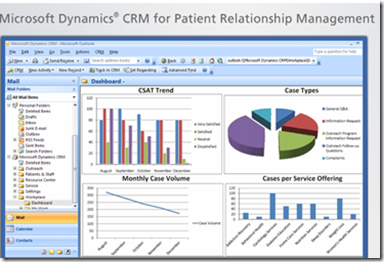
This could have been in the works for a while as way back in April of 2009 this statement came out with GE to integrate Microsoft CRM Dynamics, who knows.  BD 

GE Healthcare Centricity Software to Integrate Microsoft Dynamics AX 2009 CRM

REDMOND, Wash., and BARRINGTON, Ill.— Feb. 13, 2012 — General Electric Co. (GE), through its healthcare IT business, and Microsoft Corp. today announced several developments for their planned 50-50 joint venture, including the intention to demonstrate future product capabilities at HIMSS12, the year’s largest healthcare IT trade show, later this month. The new company, to be named Caradigm, is expected to launch in the first half of 2012, pending regulatory approvals and customary closing conditions.

Caradigm will be aimed at driving a paradigm shift in the delivery of care by enabling health systems and professionals to use real-time, system wide intelligence to improve healthcare quality and the patient experience. Upon formation, the new company will develop and market an open, interoperable technology platform and collaborative clinical applications focused on enabling better population health management to improve outcomes and the economics of health and wellness.

“We have an exciting opportunity to transform healthcare globally with an established open platform and a new generation of applications focused on population health,” Simpson said. “Around the world, delivery system reforms and payment model changes are requiring healthcare providers to integrate data across silos of care delivery to enable better care coordination and performance improvement. We’re founding Caradigm to meet the changing needs of health and healthcare across the globe.”

The two parent companies bring complementary expertise to this new venture and will contribute intellectual property, including the following:

Microsoft Amalga, an enterprise health intelligence platform

Microsoft Vergence, a single sign-on and context management solution

Microsoft expreSSO, an enterprise single sign-on solution

GE Healthcare eHealth, a Health Information Exchange

GE Healthcare Qualibria, a clinical knowledge application environment being developed in cooperation with Intermountain Healthcare (Salt Lake City) and the Mayo Clinic

Microsoft and GE Healthcare are also announcing several Caradigm leaders who will serve under CEO-designate Michael Simpson once the new company is formed. Named leaders are the following:

Chief Medical Officer and Senior Vice President, Product Strategy: Dr. Brandon Savage, currently chief medical officer, GE Healthcare IT

Chief Technology Officer and Senior Vice President, Engineering: Neal Singh, currently general manager of Microsoft Dynamics AX Global Financial Management

Chief Operating Officer: Nigel Mason, currently director, GE Healthcare Commercial Centre of Excellence

Chief People Officer: Tami Lamp, currently senior HR director, Microsoft

General Counsel and Vice President: Warren Ratliff, currently chief counsel, GE Healthcare IT Knowledge & Connectivity Solutions

http://www.microsoft.com/Presspass/press/2012/feb12/02-13HIMSPR.mspx

Thursday, February 9, 2012

Microsoft HealthVault Connects to Astra Candelis Cloud Imaging Solutions–Take Your Ultra-Sound Images With You

It was just a couple days ago I wrote about endoscopy imaging for HealthVault and now we can ultrasounds to the list of images you can store in your PHR.  One nice feature is to not have to wait for someone to prepare a DVD of images.  BD 

Multi-Media Data Sharing Comes to HealthVault PHR–Store and Share Your Endoscopic Videos From Physicians

Candelis’ ASTRA cloud-hosted suite of services is providing for the secure transferring of patient digital medical images and studies to patients’ Microsoft HealthVault accounts upon their request. 
Microsoft HealthVault is a personal health application platform that lets consumers gather, store and share health information online. 
These services benefit patients in a number of ways:image

  • Patients can obtain control of, archive and easily access their medical images stored in HealthVault from any Internet connection.
  • Patients will have full control over their data and can grant access to family members or caregivers as they desire. As an example, expectant couples can easily share Ultrasound images of their baby with loved ones.
  • Patients can avoid unnecessary duplicate imaging procedures and associated healthcare costs.

image

The connection of Candelis’ ASTRA Services with the HealthVault platform also benefits healthcare providers in the following ways:

  • Access to past imagery can provide caregivers with more information to help improve patient care
  • Costly CD/DVD publishing and distribution can be eliminated

http://www.candelis.com/products/MHV

Tuesday, February 7, 2012

Multi-Media Data Sharing Comes to HealthVault PHR–Store and Share Your Endoscopic Videos From Physicians

Back in August of 2011 Cook Medical announced the endoscope and it’s availability and now with the HD camera it looks like you get some really good graphics with imageendoscopic procedures and have the opportunity to store them in your PHR with HealthVault.  First we had the opportunity for doctors to share and collaborate and now you store your own once your doctors has made the video available.  I have several interviews over the years with Cook Medical who is the largest privately owned device and technology company in the US.  The device for the physician’s side is touch screen. 

Cook Medical Introduces Endoscope With an HD Camera Attached- Portable Imaging System for Urologists

“With high definition video and still-image capture capabilities in a compact, portable setup, endogo HD allows a physician to share and review exam findings imagewith the patient or family immediately following the exam, at the patient’s bedside or in a waiting room. A resident can also share captures with the attending physician, which may reduce the need for repeat procedures. With the endogo HD, OR imaging capabilities can now be available throughout the facility, wherever a procedure is performed. The combination of data acquisition, storage, management and the synchronization of patient folders in an easy-to-use Web application makes it possible to send an image or video over a secured connection to a referring doctor outside the facility.”

If you do not have a HealthVault account, there’s always a permanent link on the Medical Quack to the site to find out more information, as it is right above the quick and easy utility to find clinical trials.

image

HealthVault also has a nice dicom viewer for Windows users and perhaps soon they will develop it for other operating system but you can store your shared dicom images in the Azure cloud with HealthVault as well.  This feature became available last April.  It is kind of surprising today if you end up in an ER room that some of them do not have a viewer on their available computers either.  You can read more at the link below on how the “connection center” works with dicom image storage and it’s not bad at all with pretty good clarity.  BD 

HealthVault Begins Storing Medical Images (Dicom) Using Windows Azure Cloud Services With Full Encryption

Envisionier, the leader in portable endoscopic capture and data integration, today announced the first endoscopic multimedia integration between Microsoft HealthVault and the eGoWorks® application. This connection enables a patient to access, view and share their endoscopic multimedia information stored within HealthVault, an online service for managing personal health information.

With a patient’s permission, surgeons using eGoWorks services will have the option to share medical image exams and associated reports directly with a patient authorized HealthVault account. Patients will generate a secure challenge and password combination that will allow the patient to “pick up” the data and move it into their personal imageHealthVault record.

David Guy, Envisionier’s CEO states, “By connecting with HealthVault, Envisionier seeks to improve the exchange of pertinent medical endoscopic data that has been tethered to legacy video tower systems or EMR systems unable to direct connect. The integration with HealthVault allows the patient to control their medical data ”

“Patients are the clear winners with Envisionier eGoWorks’ new HealthVault connection. Not only can individuals now easily share endoscopic multimedia and reports among members of their care team; they can also be confident that they’ll have access to the information for years to come to better detect trends and changes in their health. We’re excited to have Envisionier as an ally in our journey to empower patients to take charge of their family’s care” stated Sean Nolan, Microsoft Distinguished Engineer.
eGoWorks®’s connection to HealthVault enables electronic movement of data rather than patients transporting records, reducing time and cost associated with redundant exams while additionally creating a longitudinal endoscopic record for the patient to share with primary care physicians and specialists.

http://www.prweb.com/releases/prweb2012/2/prweb9168795.htm