Several people have asked me about what I ate on my 30-day clean Paleo experiment that helped me to bust through my stall. So I thought I would elaborate.
First of all, let me say I am a tall (6'3"), 50-year-old male. My goal weight is between 215-220 pounds. Also, I tried to keep it simple. I ate very palatable foods, but choices low on food reward. For example, steak, which is very palatable, but does not cause me to want more, as more rewarding foods do. So here is the menu.
Every morning, I ate two fried eggs (cooked in coconut oil) and either some homemade sausage or thick sliced bacon. Plus water.
Lunch was a bit more varied. I would often take a soup made with beef or chicken stock, that contained some meat, but lots of veggies and a safe starch (white potatoes or rice). I tried to have something made with bone broth every day. I would also take a salad, with tuna fish, olives, olive oil, and Balsamic vinegar. Sometimes, I would take a piece of meat that was leftover from dinner (e.g., chicken or ribs) instead of either the soup or salad.
For dinner, I would eat a piece of meat (beef, pork, chicken, salmon or other fish) plus vegetables. If I hadn't eaten a safe starch for lunch, I would also include a small sweet potato. The only condiments I used were salt and pepper.
I rarely snacked, but if I did, it was usually berries of some sort. Upon occasion, I had some herbal mint tea, unsweetened. And I made sure I drank adequate water.
In addition to all of that, I would eat two to three Brazil nuts per day, plus take liver pills. That is, frozen pieces of raw liver that I had chopped up into pill-sized shapes that I could swallow (thanks Chris Kresser for that great idea; I have a hard time with liver). I would also supplement with other vitamins, as per the Perfect Health Diet.
Whenever possible, I practiced intermittent fasting. Sometimes for as much as 24 hours, but mostly I would go 13 to 16 hours between eating. Once dinner was over (usually around 6:00 p.m.), I didn't eat anything else until breakfast the next morning (around 7:00 a.m.; later on weekends).
And it worked beautifully.
Showing posts with label weight loss. Show all posts
Showing posts with label weight loss. Show all posts
Friday, February 3, 2012

Monday, January 30, 2012
Busting Through My Stall
One of my new year's resolutions was to do a 30-day, very clean Paleo experiment. I chose a hybrid of the Perfect Health Diet and Chris Kresser's Personal Paleo Code reset diet. So for the past 30 days, I gave up dairy, artificial sweeteners, dark chocolate, most packaged and processed foods, and all forms of sweeteners, artificial or not (e.g., no more maple or rice syrup). I avoided eating out as much as possible and concentrated on eating real, whole foods that I cooked myself. I made sure to eat safe starches each and every day, in the form of sweet potatoes, potatoes, or rice. I do not drink alcohol, coffee, and caffeinated teas, so they were not a problem for me. And I paid attention to calories, as they matter. Today is day 30 of this experiment.
What Happened
So what happened? Several things, all of them good.
First, I busted through my stall. For about six months, I had stalled in the 242-245 pound range, though in recent weeks I had gotten up to has high as 249. That was a good 25-30 pounds above my ideal weight (I am tall). On January 1, 2012, I weighed 249.8 pounds and this morning, January 30, 2012, I weighed 233.8 pounds, for a total loss of 16 pounds.
Second, my blood glucose levels were excellent. They fell, and rapidly. In particular, my fasting blood glucose levels were a bit high (the "dawn phenomenon"), but they fell to below 100 most mornings. One-hour readings were almost always below 120 and two-hour readings were close to 100.
Third, I broke an addiction to artificial sweeteners. I haven't had anything with an artificial sweetener for 30 days now and have drunk nothing but water and herbal tea. Something caused me to have big headaches the first week, as I was weaning myself from non-natural foods. It was like the caffeine withdrawal I had when I finally gave up diet colas three years ago (I am not a coffee or caffeinated tea drinker). I don't know what caused the headaches, but I am wondering if it wasn't all the artificial sweeteners I had been consuming.
Why I Believe it Worked
So why was I able to drop 16 pounds in 30 days, when I was stalled for six months? Because I was consuming fewer calories, bottom line. When you cut out dairy, sweeteners (artificial and real), chocolate, and other processed foods, you simply eat less. I noticed that immediately, when I realized the range of foods available for me to eat was quite limited. I also stopped snacking. Plus the foods I actually ate were whole and real. I only ate out when I absolutely could not help it.
After going gangbusters on a low carb diet, I got sloppy and started eating things that were probably not good for me. Dark chocolate tops that list. I pretty much ate some chocolate almost every day and for me, chocolate is a trigger food. Also, I bought into all the "high fat low carb" fairy tale hype I had seen on the Internet. So I was making an effort to add fat to everything. What I didn't really realize was that a low carb or Paleo diet is already high fat; you don't have to add fat to make it high fat. When you cut back on carbs, fat fills the void. Naturally.
I also ate a lot of energy dense foods as snacks, such as cheeses, almonds, almond flour, other nuts, and ice cream. You simply cannot eat all you want of these types of food and lose weight; calories count. This is a message that needs repeating on the Internet.
Challenges I Faced
It wasn't easy to do. I got withdrawal headaches from something that were very unpleasant for the first week. Then my father passed away and I spent 10 days on the road, eating what I could, when I could. On only one occasion during the funeral trip was I forced to make a compromise. I hadn't eaten much and, because of traveling, had to eat on the road. I probably consumed fewer than 1,000 calories that day, but I did buy a stick of beef jerky and some smokehouse almonds from a convenience store to get through that particular situation. I also had a really bad cold two weeks into the process and took some cold medication (but not a lot) . I had wanted to have a chemical free experience, but life happened.
Lessons Learned
Here are some lessons I learned:
Moving Forward
I will be gradually reintroducing some of the foods I have not eaten for a while, but continue to pay attention to calories. I am getting near my goal of 215-220 pounds and I want to reach that, as I want to go paragliding in Switzerland this summer. I am still taking refuge in the Carbsane Asylum and not blindly accepting what I read on the web anymore. There are many wise voices on the web, but also lots of fairy tales.
What Happened
So what happened? Several things, all of them good.
First, I busted through my stall. For about six months, I had stalled in the 242-245 pound range, though in recent weeks I had gotten up to has high as 249. That was a good 25-30 pounds above my ideal weight (I am tall). On January 1, 2012, I weighed 249.8 pounds and this morning, January 30, 2012, I weighed 233.8 pounds, for a total loss of 16 pounds.
Second, my blood glucose levels were excellent. They fell, and rapidly. In particular, my fasting blood glucose levels were a bit high (the "dawn phenomenon"), but they fell to below 100 most mornings. One-hour readings were almost always below 120 and two-hour readings were close to 100.
Third, I broke an addiction to artificial sweeteners. I haven't had anything with an artificial sweetener for 30 days now and have drunk nothing but water and herbal tea. Something caused me to have big headaches the first week, as I was weaning myself from non-natural foods. It was like the caffeine withdrawal I had when I finally gave up diet colas three years ago (I am not a coffee or caffeinated tea drinker). I don't know what caused the headaches, but I am wondering if it wasn't all the artificial sweeteners I had been consuming.
Why I Believe it Worked
So why was I able to drop 16 pounds in 30 days, when I was stalled for six months? Because I was consuming fewer calories, bottom line. When you cut out dairy, sweeteners (artificial and real), chocolate, and other processed foods, you simply eat less. I noticed that immediately, when I realized the range of foods available for me to eat was quite limited. I also stopped snacking. Plus the foods I actually ate were whole and real. I only ate out when I absolutely could not help it.
After going gangbusters on a low carb diet, I got sloppy and started eating things that were probably not good for me. Dark chocolate tops that list. I pretty much ate some chocolate almost every day and for me, chocolate is a trigger food. Also, I bought into all the "high fat low carb" fairy tale hype I had seen on the Internet. So I was making an effort to add fat to everything. What I didn't really realize was that a low carb or Paleo diet is already high fat; you don't have to add fat to make it high fat. When you cut back on carbs, fat fills the void. Naturally.
I also ate a lot of energy dense foods as snacks, such as cheeses, almonds, almond flour, other nuts, and ice cream. You simply cannot eat all you want of these types of food and lose weight; calories count. This is a message that needs repeating on the Internet.
Challenges I Faced
It wasn't easy to do. I got withdrawal headaches from something that were very unpleasant for the first week. Then my father passed away and I spent 10 days on the road, eating what I could, when I could. On only one occasion during the funeral trip was I forced to make a compromise. I hadn't eaten much and, because of traveling, had to eat on the road. I probably consumed fewer than 1,000 calories that day, but I did buy a stick of beef jerky and some smokehouse almonds from a convenience store to get through that particular situation. I also had a really bad cold two weeks into the process and took some cold medication (but not a lot) . I had wanted to have a chemical free experience, but life happened.
Lessons Learned
Here are some lessons I learned:
- Calories count.
- Whole foods are best.
- I was addicted to chocolate, which means I will probably have to avoid it in the future.
- I can survive without diet soda.
- I miss cheese, but will not go overboard with it when it is reintroduced.
- Coconut oil is my friend.
- I got sloppy and careless on the low carb diet, and consumed too many calories each day, which is why I stalled.
- Paleo is a much better eating philosophy than low carb.
- The low carb conventional wisdom found on the web (e.g., "Add fat!") is wrong.
- However, as a road warrior, low carb is easier to live with than clean Paleo, if one is forced to eat out a lot.
Moving Forward
I will be gradually reintroducing some of the foods I have not eaten for a while, but continue to pay attention to calories. I am getting near my goal of 215-220 pounds and I want to reach that, as I want to go paragliding in Switzerland this summer. I am still taking refuge in the Carbsane Asylum and not blindly accepting what I read on the web anymore. There are many wise voices on the web, but also lots of fairy tales.
Monday, December 26, 2011
Taubes on Low Carb Stalls
Low carb diets stall if you need to lose more than 17-19% of your body weight. That's the dirty little secret about low carb diets, one that I wish I had known. Weight Watchers took me all the way to goal, but low carb stalls. This has left me about 25-30 pounds short of my goal.
The good news is that I am weight stable; the bad news is that I am no longer going down. This is also very common.
Gary Taubes slickly warned us all of this phenomenon in his book, Why We Get Fat. So I can't say I wasn't warned, but he sugar coats the reality. The following quote is from pp. 204-205 of the 2010 hardback edition of his book:
"The fewer carbohydrates we consume, the leaner we will be. This is clear. But there's no guarantee that the leanest we can be will ever be as lean as we'd like. This is a reality to be faced... [I]f you are not actively losing fat and yet want to be leaner still, the only viable option (short of surgery or the prospect that the pharmaceutical industry will come through with a safe and effective anti-obesity pill) is to eat still fewer carbohydrates, identify and avoid other foods that might stimulate significant insulin secretion--diet sodas, dairy products (cream, for instance), coffee, and nots, among others--and have more patience." (The bold and italicized emphasis is mine).
Why is this aspect of the low carb experience not given more exposure? I had to learn about it by reading the What They Don't Tell You About Low Carb Diets web site (a very good web site, which I highly recommend). And is patience the only way to get to goal? Carbsane has stalled, but been weight stable, for over three years now. How much more patience is needed? Lots of suggestions for busting through stalls, such as drinking more water, intermittent fasting (Taubes on p. 205 of the book referenced above), counting calories, etc.
Or perhaps low carb is not the answer, or at least, not the entire answer, to losing weight. I do not want to remain obese, even if other health markers are good (e.g., normal blood pressure, stabilized blood glucose levels). That is not a good strategy.
So over the next few months, I am going to explore other options. I remain committed to the Perfect Health Diet way of eating, but I am going to aggressively monitor calories and experiment with various foods that may or may not be causing me to stall. I have a goal in mind: I will be taking a group of students on a study abroad trip to Europe this summer (gratuitous link to my study abroad blog) and I want to be thin enough to go paragliding in Interlaken, Switzerland. The upper limit is 220 pounds, so that is my goal. I should be able to lose another 25 pounds in the next six months or so and be ready for the paragliding activity.
The good news is that I am weight stable; the bad news is that I am no longer going down. This is also very common.
Gary Taubes slickly warned us all of this phenomenon in his book, Why We Get Fat. So I can't say I wasn't warned, but he sugar coats the reality. The following quote is from pp. 204-205 of the 2010 hardback edition of his book:
"The fewer carbohydrates we consume, the leaner we will be. This is clear. But there's no guarantee that the leanest we can be will ever be as lean as we'd like. This is a reality to be faced... [I]f you are not actively losing fat and yet want to be leaner still, the only viable option (short of surgery or the prospect that the pharmaceutical industry will come through with a safe and effective anti-obesity pill) is to eat still fewer carbohydrates, identify and avoid other foods that might stimulate significant insulin secretion--diet sodas, dairy products (cream, for instance), coffee, and nots, among others--and have more patience." (The bold and italicized emphasis is mine).
Why is this aspect of the low carb experience not given more exposure? I had to learn about it by reading the What They Don't Tell You About Low Carb Diets web site (a very good web site, which I highly recommend). And is patience the only way to get to goal? Carbsane has stalled, but been weight stable, for over three years now. How much more patience is needed? Lots of suggestions for busting through stalls, such as drinking more water, intermittent fasting (Taubes on p. 205 of the book referenced above), counting calories, etc.
Or perhaps low carb is not the answer, or at least, not the entire answer, to losing weight. I do not want to remain obese, even if other health markers are good (e.g., normal blood pressure, stabilized blood glucose levels). That is not a good strategy.
So over the next few months, I am going to explore other options. I remain committed to the Perfect Health Diet way of eating, but I am going to aggressively monitor calories and experiment with various foods that may or may not be causing me to stall. I have a goal in mind: I will be taking a group of students on a study abroad trip to Europe this summer (gratuitous link to my study abroad blog) and I want to be thin enough to go paragliding in Interlaken, Switzerland. The upper limit is 220 pounds, so that is my goal. I should be able to lose another 25 pounds in the next six months or so and be ready for the paragliding activity.
Monday, October 31, 2011
Obese No Longer
I lost two pounds this week, but the bigger news is this: now that I weigh 239.8 pounds, my BMI has dropped below the "obese" threshold. I am officially no longer obese; I am now merely "overweight," with a BMI of 29.9. Yes, I am tall (6'3").
Have I ever mentioned that I think the BMI measurement is a bunch of bunk?
Have I ever mentioned that I think the BMI measurement is a bunch of bunk?
Friday, October 28, 2011
Back from Europe
I am back from Europe, where I have been for the past six weeks, with a study abroad group. I had an interesting experience with the Perfect Health Diet while in Europe. First off, it appears I lost 3-4 pounds while I was gone, which is amazing, considering that we ate out almost every day for the past three weeks, often three times per day when we were in deep travel mode.
But following the PHD principles led me to making good choices. Among the items I consumed while abroad: a good deal of cheese made with raw milk; deviled lamb kidneys; pate de foie gras, pheasant pate, goose liver, pastured eggs, grass fed beef (especially in Scotland and Ireland), many truly fresh vegetables, a bit of chicken, fish, shrimp, etc. It was especially easy to eat in France, Belgium, and Luxembourg, as the local culture practically demands quality cuisine. It was more difficult in Switzerland, Germany, England, and Northern Ireland; somewhat less difficult in Wales, Scotland, and Ireland. I spent the most time in Belgium, with a fresh market every weekend and whenever possible, we purchased fresh food and ate in. But when we ate out in Belgium, we ran in to some excellent restaurants, such as Comme Soupe and t'Injaske. Everything is made fresh and the quality is just superb. My wife even bought a Belgian soup cookbook, so we can eat tasty, fresh, and hearty soups in the states.
The hardest part came when traveling in countries not known for their cuisine (e.g., England, Germany, Switzerland), but my strategy there was to hit the supermarket and buy whatever I could to eat. That usually meant cheeses, chicken, soup, vegetables, and yogurt.
So I am living proof that one can travel, a lot, and eat out, a lot, yet still lose weight when making wise choices. I am especially grateful to the Perfect Health Diet for convincing me to add back foods like rice, potatoes, bananas, and yogurt, which made the task all that much easier. Without spiking my blood sugars, but that is a post for another day (I am a type II diabetic). This "safe starch" concept has really helped make the low carb lifestyle sustainable and healthy.
But following the PHD principles led me to making good choices. Among the items I consumed while abroad: a good deal of cheese made with raw milk; deviled lamb kidneys; pate de foie gras, pheasant pate, goose liver, pastured eggs, grass fed beef (especially in Scotland and Ireland), many truly fresh vegetables, a bit of chicken, fish, shrimp, etc. It was especially easy to eat in France, Belgium, and Luxembourg, as the local culture practically demands quality cuisine. It was more difficult in Switzerland, Germany, England, and Northern Ireland; somewhat less difficult in Wales, Scotland, and Ireland. I spent the most time in Belgium, with a fresh market every weekend and whenever possible, we purchased fresh food and ate in. But when we ate out in Belgium, we ran in to some excellent restaurants, such as Comme Soupe and t'Injaske. Everything is made fresh and the quality is just superb. My wife even bought a Belgian soup cookbook, so we can eat tasty, fresh, and hearty soups in the states.
The hardest part came when traveling in countries not known for their cuisine (e.g., England, Germany, Switzerland), but my strategy there was to hit the supermarket and buy whatever I could to eat. That usually meant cheeses, chicken, soup, vegetables, and yogurt.
So I am living proof that one can travel, a lot, and eat out, a lot, yet still lose weight when making wise choices. I am especially grateful to the Perfect Health Diet for convincing me to add back foods like rice, potatoes, bananas, and yogurt, which made the task all that much easier. Without spiking my blood sugars, but that is a post for another day (I am a type II diabetic). This "safe starch" concept has really helped make the low carb lifestyle sustainable and healthy.
Saturday, October 22, 2011
How Does Low Carb Work? A Review of Various Theories
In a recent post, I speculated on reasons why people are obese. In many ways, this current post is the opposite: why do low carb diets reduce obese people to slender people? There are a lot of claims on the Internet about why low carb diets work, some of them quite outrageous, and I want to seek wisdom on this topic.
The Carbohydrate Hypothesis. Gary Taubes is the leading proponent of the hypothesis that carbs, especially refined carbs like flour and sugar, are fattening. This is also known as the "carbohydrate hypothesis." According to Taubes, carbs lead to insulin spikes, which leads to fat deposition (accumulation). The "carbohydrate hypothesis" is widely disputed and to date, there is no empirical evidence to back it up, though Taubes is apparently trying to raise money for such an empirical test. Personally, I no longer believe this theory, though at one time, I was a believer. True believers in this hypothesis include Jimmy Moore, Dana Carpender, Gary Taubes (of course), and Tom Naughton, among many others.
Metabolic Advantage. Others suggest that a low carb diet gives you a metabolic advantage (the idea that you burn calories more efficiently while low carbing, and can therefore consume greater quantities of low carb food and still lose weight), though at present there is very little empirical evidence to back up this claim. This idea is also widely disputed, as exemplified by the dust-up between Michael Eades and Anthony Colpo on this very topic. The metabolic advantage theory leads to the idea that calories don't count, that some calories (e.g., "low carb" calories") are better than other calories. Thus, if you eat low carb, you don't have to worry about calories. I am also on record as rejecting this idea.
Satiety. Another theory about why low carb diets work is that protein and fat are more satiating (see this article, too). When you eat a high fat, moderate protein, low carb diet you lose weight because you spontaneously consume fewer calories. There seems to be a lot more evidence for this theory (e.g., here, here, and here). Note, too, that this theory implicitly rejects the theory of metabolic advantage mentioned above. I am on record as saying this is a major reason why low carb works.
Toxins, Infections, and Malnutrition. The Perfect Health Diet maintains that weight loss happens when you eliminate toxins from your diet, as well as malnutrition and infections caused by your diet. The Jaminets have developed a diet based on these three ideas, which is summarized here. The diet is a low carb diet that includes so-called "safe starches," such as potatoes and white rice. A "safe starch" has nothing to do with carb or glucose content. It is a term invented by the Jaminets and "refers to any starchy food which, after normal cooking, lacks toxins, chiefly protein toxins. We do not consider glucose to be a toxin, though it may become toxic in hyperglycemia" (reference). Their definition of a low carb diet is one between 100 to 150 grams of carbs per day, mostly from "safe starches," as a low carb diet for them "means eating less than the body's actual glucose utilization, so that a glucose deficit has to be made up by gluconeogenesis" (reference). But weight loss happens not because carbs are reduced, but because toxins are eliminated, infections are reduced, and malnutrition is aggressively attacked. I am currently following the Perfect Health Diet, so I guess you could say I am a believer in this hypothesis.
Low Carb Works by Accident. Kurt Harris, M.D., maintains that low carb diets work by accident. Specifically, he says:
Low carb plans have helped people lose fat by reducing food reward from white flour and excess sugar and maybe linoleic acid. This is by accident as it happens that most of the "carbs" in our diet are coming in the form of manufactured and processed items that are simply not real food. Low carb does not work for most people via blood sugar or insulin "locking away" fat. Insulin is necessary to store fat, but is not the main hormone regulating fat storage. That would be leptin. (emphasis added).
Food reward is an idea championed by Stephan Guyenet and the basic idea is that highly palatable foods lead to obesity. Lowering food reward, or palatability, by reducing refined sugars, flours, and even salt and other spices to produce more bland eating options leads to losing weight. The idea proposed by Harris and Guyenet is that low carb diets work, not by design, but by accident. By following Atkins, for example, you naturally reduce food reward by eliminating a whole macronutrient category, carbohydrates. As the Harris quote above indicates, he (and Guyenet) both reject Taubes' carbohydrate hypothesis.
This is a curious argument, one that makes a certain amount of sense. Why does Atkins work? If you follow Atkins, you eliminate two major problematic foods: refined sugars and refined flour. This will naturally lead to weight loss. Atkins is not too concerned about seed oils, though, which is why I don't claim to be following Atkins. My version of a low carb diet has eliminated seed oils from a very early stage in my weight loss history. Atkins also produces a lot of junk food, made with wheat gluten, soy, and other products I don't consume. An Atkins low carb diet is not necessarily a low calorie diet, if you eat too much low carb junk food. So I do think there is an element of "accident" in why low carb works.
My Position. I believe low carb works because 1) protein and fat are more satiating than carbs; 2) low carb eating causes me to spontaneously consume fewer calories, since protein and fat are more satiating than carbs; 3) calories count, so be mindful of how much you eat; 4) low carb lowers food reward by eliminating sugar, flour, and seed oils, especially those three in combination; 5) low carb removes toxins, reduces infections, and corrects malnutrition; 6) low carb requires that I eat real foods, the kind that are not processed; and 7) low carb simply offers fewer food choices. It is a lot harder to snack and harder to eat out, at least in the U.S.A. This means I eat real food cooked at home more often than not. Fortunately, my desire to snack is greatly reduced thanks to the satiety of what I eat.
I do not believe in the carbohydrate hypothesis and reject the notion that carbs are inherently fattening (this idea seems to be widely believed and held on the Internet). Rejecting this idea opened my mind to the idea of eating "safe starches," as defined by the Jaminets. I also reject the idea of metabolic advantage and believe that calories count. Thus, I would never substitute a cup of heavy cream for a cup of whole milk, simply because there are fewer carbs in the cream than in the milk, nor would I add 12 tablespoons of fat to two pounds of meat to increase the fat content of my diet That is simply too many calories and a low carb diet is already a high fat, moderate protein, low carb way of eating. You don't need to add a lot of additional fat.
Taken together, the seven reasons cited above are a recipe for low carb success.
The Carbohydrate Hypothesis. Gary Taubes is the leading proponent of the hypothesis that carbs, especially refined carbs like flour and sugar, are fattening. This is also known as the "carbohydrate hypothesis." According to Taubes, carbs lead to insulin spikes, which leads to fat deposition (accumulation). The "carbohydrate hypothesis" is widely disputed and to date, there is no empirical evidence to back it up, though Taubes is apparently trying to raise money for such an empirical test. Personally, I no longer believe this theory, though at one time, I was a believer. True believers in this hypothesis include Jimmy Moore, Dana Carpender, Gary Taubes (of course), and Tom Naughton, among many others.
Metabolic Advantage. Others suggest that a low carb diet gives you a metabolic advantage (the idea that you burn calories more efficiently while low carbing, and can therefore consume greater quantities of low carb food and still lose weight), though at present there is very little empirical evidence to back up this claim. This idea is also widely disputed, as exemplified by the dust-up between Michael Eades and Anthony Colpo on this very topic. The metabolic advantage theory leads to the idea that calories don't count, that some calories (e.g., "low carb" calories") are better than other calories. Thus, if you eat low carb, you don't have to worry about calories. I am also on record as rejecting this idea.
Satiety. Another theory about why low carb diets work is that protein and fat are more satiating (see this article, too). When you eat a high fat, moderate protein, low carb diet you lose weight because you spontaneously consume fewer calories. There seems to be a lot more evidence for this theory (e.g., here, here, and here). Note, too, that this theory implicitly rejects the theory of metabolic advantage mentioned above. I am on record as saying this is a major reason why low carb works.
Toxins, Infections, and Malnutrition. The Perfect Health Diet maintains that weight loss happens when you eliminate toxins from your diet, as well as malnutrition and infections caused by your diet. The Jaminets have developed a diet based on these three ideas, which is summarized here. The diet is a low carb diet that includes so-called "safe starches," such as potatoes and white rice. A "safe starch" has nothing to do with carb or glucose content. It is a term invented by the Jaminets and "refers to any starchy food which, after normal cooking, lacks toxins, chiefly protein toxins. We do not consider glucose to be a toxin, though it may become toxic in hyperglycemia" (reference). Their definition of a low carb diet is one between 100 to 150 grams of carbs per day, mostly from "safe starches," as a low carb diet for them "means eating less than the body's actual glucose utilization, so that a glucose deficit has to be made up by gluconeogenesis" (reference). But weight loss happens not because carbs are reduced, but because toxins are eliminated, infections are reduced, and malnutrition is aggressively attacked. I am currently following the Perfect Health Diet, so I guess you could say I am a believer in this hypothesis.
Low Carb Works by Accident. Kurt Harris, M.D., maintains that low carb diets work by accident. Specifically, he says:
Low carb plans have helped people lose fat by reducing food reward from white flour and excess sugar and maybe linoleic acid. This is by accident as it happens that most of the "carbs" in our diet are coming in the form of manufactured and processed items that are simply not real food. Low carb does not work for most people via blood sugar or insulin "locking away" fat. Insulin is necessary to store fat, but is not the main hormone regulating fat storage. That would be leptin. (emphasis added).
Food reward is an idea championed by Stephan Guyenet and the basic idea is that highly palatable foods lead to obesity. Lowering food reward, or palatability, by reducing refined sugars, flours, and even salt and other spices to produce more bland eating options leads to losing weight. The idea proposed by Harris and Guyenet is that low carb diets work, not by design, but by accident. By following Atkins, for example, you naturally reduce food reward by eliminating a whole macronutrient category, carbohydrates. As the Harris quote above indicates, he (and Guyenet) both reject Taubes' carbohydrate hypothesis.
This is a curious argument, one that makes a certain amount of sense. Why does Atkins work? If you follow Atkins, you eliminate two major problematic foods: refined sugars and refined flour. This will naturally lead to weight loss. Atkins is not too concerned about seed oils, though, which is why I don't claim to be following Atkins. My version of a low carb diet has eliminated seed oils from a very early stage in my weight loss history. Atkins also produces a lot of junk food, made with wheat gluten, soy, and other products I don't consume. An Atkins low carb diet is not necessarily a low calorie diet, if you eat too much low carb junk food. So I do think there is an element of "accident" in why low carb works.
My Position. I believe low carb works because 1) protein and fat are more satiating than carbs; 2) low carb eating causes me to spontaneously consume fewer calories, since protein and fat are more satiating than carbs; 3) calories count, so be mindful of how much you eat; 4) low carb lowers food reward by eliminating sugar, flour, and seed oils, especially those three in combination; 5) low carb removes toxins, reduces infections, and corrects malnutrition; 6) low carb requires that I eat real foods, the kind that are not processed; and 7) low carb simply offers fewer food choices. It is a lot harder to snack and harder to eat out, at least in the U.S.A. This means I eat real food cooked at home more often than not. Fortunately, my desire to snack is greatly reduced thanks to the satiety of what I eat.
I do not believe in the carbohydrate hypothesis and reject the notion that carbs are inherently fattening (this idea seems to be widely believed and held on the Internet). Rejecting this idea opened my mind to the idea of eating "safe starches," as defined by the Jaminets. I also reject the idea of metabolic advantage and believe that calories count. Thus, I would never substitute a cup of heavy cream for a cup of whole milk, simply because there are fewer carbs in the cream than in the milk, nor would I add 12 tablespoons of fat to two pounds of meat to increase the fat content of my diet That is simply too many calories and a low carb diet is already a high fat, moderate protein, low carb way of eating. You don't need to add a lot of additional fat.
Taken together, the seven reasons cited above are a recipe for low carb success.
Thursday, October 13, 2011
Silence Explained
I take students abroad for my day job and have been in Europe for the past few weeks, working 12-15 hour days. It hasn't left a lot of time for blogging, so I hope that explains my silence. Here are some photos I took from recent travels to Belgium, France, Ireland, Northern Ireland, and Scotland (plus a gratuitous link to my other, neglected study abroad blog).

So a few links: Paul Jaminet responds to various comments about safe starches. The man is a class act and I respect him more now than ever before. Not only has he taught me about how to do low carb safely and correctly, he has taught me how to be a gentleman as well.
I some times despair at finding wisdom in the low carb blogosphere; everyone thinks carbs are fattening and that all we have to do is cut carbs to lose weight. This is not true. But occasionally, I do stumble upon low carb wisdom. Here is one such post. Finding low carb wisdom is the reason I started this blog.
There has been a lot of activity about the book Wheat Belly by Dr. William Davis. I even wrote a review of the book. But Chris Masterjohn, another superb example of a human being, wrote a very decent review of the book that captures the best and the worst aspects of the book. You can tell it is a compelling review by reading Dr. Davis' response to Masterjohn's blog.

So a few links: Paul Jaminet responds to various comments about safe starches. The man is a class act and I respect him more now than ever before. Not only has he taught me about how to do low carb safely and correctly, he has taught me how to be a gentleman as well.
I some times despair at finding wisdom in the low carb blogosphere; everyone thinks carbs are fattening and that all we have to do is cut carbs to lose weight. This is not true. But occasionally, I do stumble upon low carb wisdom. Here is one such post. Finding low carb wisdom is the reason I started this blog.
There has been a lot of activity about the book Wheat Belly by Dr. William Davis. I even wrote a review of the book. But Chris Masterjohn, another superb example of a human being, wrote a very decent review of the book that captures the best and the worst aspects of the book. You can tell it is a compelling review by reading Dr. Davis' response to Masterjohn's blog.
Monday, September 5, 2011
10% Goal Reached--Again
The weight loss continues to happen, though much more slowly than at the beginning of my low carb way of eating. That said, today I hit another milestone. I lost 10% of my body weight--for the second time. I started out weighing 301.6, then some time in early May, I hit my first 10% goal by losing my first 30 pounds (271.6). Today when I weighed myself (I weigh in every Monday morning), I was at 242.6, down another 29 pounds and realized that some time in the last week or two, I hit my 10% goal again.
A lot has changed since Valentine's Day, 2011, when I embarked on this low carb way of eating. At first, I was losing weight very rapidly, but that has slowed in recent months, to about a pound per week. I have changed my approach to my low carb way of eating. First, after stalling, I started to count calories. Then I doubled my carbs about a month ago but still stayed under 50 grams of carbohydrates per day. About a week ago, I started the Perfect Health Diet, a low carb way of eating that permits "safe" starches, such as rice and potatoes. I don't eat a lot of these safe starches, just enough to provide my body with the glucose it needs to function, but that effectively means I have doubled my carb intake again, this time to around 100 grams of carbs per day. I was afraid of gaining water weight by doing this, but that hasn't happened so far, and I am cautiously optimistic. This past week's weight loss came from the Perfect Health Diet version of my low carb eating experience.
Even though the weight loss has slowed, I am more committed than ever to this way of eating. My hunger is at bay thanks to the protein and fat I consume and the food I am able to eat is very delicious. It is a much more pleasant experience than Weight Watchers, even if the weight came off faster on Weight Watchers. This is sustainable and I feel like I will be able to eat this way for the rest of my life. That is the key to weight loss and weight maintenance.
A lot has changed since Valentine's Day, 2011, when I embarked on this low carb way of eating. At first, I was losing weight very rapidly, but that has slowed in recent months, to about a pound per week. I have changed my approach to my low carb way of eating. First, after stalling, I started to count calories. Then I doubled my carbs about a month ago but still stayed under 50 grams of carbohydrates per day. About a week ago, I started the Perfect Health Diet, a low carb way of eating that permits "safe" starches, such as rice and potatoes. I don't eat a lot of these safe starches, just enough to provide my body with the glucose it needs to function, but that effectively means I have doubled my carb intake again, this time to around 100 grams of carbs per day. I was afraid of gaining water weight by doing this, but that hasn't happened so far, and I am cautiously optimistic. This past week's weight loss came from the Perfect Health Diet version of my low carb eating experience.
Even though the weight loss has slowed, I am more committed than ever to this way of eating. My hunger is at bay thanks to the protein and fat I consume and the food I am able to eat is very delicious. It is a much more pleasant experience than Weight Watchers, even if the weight came off faster on Weight Watchers. This is sustainable and I feel like I will be able to eat this way for the rest of my life. That is the key to weight loss and weight maintenance.
Sunday, August 14, 2011
Thinking Through Diet Options
The recent Internet firestorm involving Gary Taubes and Stephan Guyenet has left me with a lot of questions.
As a weight loss method, low carb works--to a point. I have lost 55 pounds in six months, but I am still 30 pounds from my goal weight and I am stalled. There is a lot of chatter on the Internet about stalls: they happen after you lose between 17 and 20% of your body weight. I have lost about 18% of my body weight fairly effortlessly without really counting anything on a low carb diet, then I stalled, and am now counting calories to break through the stall. So far, I am very slowly creeping downward.
Is Taubes wrong? Is the problem carbohydrates, or something else? Clearly, what he advocates (reducing carbs) works, at least to a point, and at least for me. But why does it work? In substantially reducing carbs, I have cut out all forms of wheat and most forms of sugar, two carbs widely believed to be problematic. Heck, even the low fat, high carb dieters come out against sugar. But is Taubes condemning all carbs, when only some of them are bad? Isn't this what happened with fat? Ancel Keys waged war against saturated fat and now America is lipophobic (afraid of fat). Taubes describes the complete history of the Keys and the lipid hypothesis ("saturated fats cause heart disease") in Good Calories Bad Calories.
Is Gary Taubes doing the same thing to carbohydrates? One person described Taubes as the "Ancel Keys of carbohydrates." Ouch, that's gotta hurt. But Taubes is relentlessly promoting the "carbs are bad, carbs --> insulin --> fat accumulation" hypothesis. So the comment may hurt because there is more than a ring of truth to it. Is Taubes pushing a solution that is potentially as bad, in its own way, as Keys' agenda was? America is now lipophobic; will Taubes cause us to become carbophobic as well?
Many in the low carb blogosphere point out that carbs are not bad across the board. Certain foods, which happen to be carbohydrates, are bad (e.g., high fructose corn syrup, sugar, flour and wheat products, etc.; see Kurt Harris, M.D. and Paul Jaminet, Ph.D. [see this page, too] ). But vegetable oils, such as corn, soy, canola, etc., are also bad, according to these two sites, and they are fats, not carbohydrates. Kurt Harris tells us to ignore macro nutrients (fats, carbs, protein) altogether and instead avoid the NADs, or "neolithic agents of disease." In other words, fructose, wheat, and vegetable oils. Both Harris and Jaminet are okay with eating non-problematic carbs such as white rice, yams, and potatoes. However, neither Harris nor Jaminet are diabetic and their plans for eating are not necessarily approaches to weight loss.
So I could see myself following one of these plans (or adopting the Weston A. Price style of eating), after I lose my weight. However, I am still 30 pounds away from goal. What to do? Low carbing has helped me to lose weight, control my blood sugars, normalize my blood pressure, and sleep better, but can it get me all the way to goal? Weight Watchers took me all the way to goal, but that is a semi-starvation plan and high in carbs, which is not good for my type II diabetes.
After a lot of thought, I will keep on with the low carb way of life (but I will double my carbs), count calories, exercise more, and perhaps other things (e.g., eliminate all artificial sweeteners, eat only whole, real foods), if necessary, until I reach my goal. However, I am very open to suggestions. When I am at goal, I will likely switch to one of the plans mentioned above for weight maintenance and general health.
As a weight loss method, low carb works--to a point. I have lost 55 pounds in six months, but I am still 30 pounds from my goal weight and I am stalled. There is a lot of chatter on the Internet about stalls: they happen after you lose between 17 and 20% of your body weight. I have lost about 18% of my body weight fairly effortlessly without really counting anything on a low carb diet, then I stalled, and am now counting calories to break through the stall. So far, I am very slowly creeping downward.
Is Taubes wrong? Is the problem carbohydrates, or something else? Clearly, what he advocates (reducing carbs) works, at least to a point, and at least for me. But why does it work? In substantially reducing carbs, I have cut out all forms of wheat and most forms of sugar, two carbs widely believed to be problematic. Heck, even the low fat, high carb dieters come out against sugar. But is Taubes condemning all carbs, when only some of them are bad? Isn't this what happened with fat? Ancel Keys waged war against saturated fat and now America is lipophobic (afraid of fat). Taubes describes the complete history of the Keys and the lipid hypothesis ("saturated fats cause heart disease") in Good Calories Bad Calories.
Is Gary Taubes doing the same thing to carbohydrates? One person described Taubes as the "Ancel Keys of carbohydrates." Ouch, that's gotta hurt. But Taubes is relentlessly promoting the "carbs are bad, carbs --> insulin --> fat accumulation" hypothesis. So the comment may hurt because there is more than a ring of truth to it. Is Taubes pushing a solution that is potentially as bad, in its own way, as Keys' agenda was? America is now lipophobic; will Taubes cause us to become carbophobic as well?
Many in the low carb blogosphere point out that carbs are not bad across the board. Certain foods, which happen to be carbohydrates, are bad (e.g., high fructose corn syrup, sugar, flour and wheat products, etc.; see Kurt Harris, M.D. and Paul Jaminet, Ph.D. [see this page, too] ). But vegetable oils, such as corn, soy, canola, etc., are also bad, according to these two sites, and they are fats, not carbohydrates. Kurt Harris tells us to ignore macro nutrients (fats, carbs, protein) altogether and instead avoid the NADs, or "neolithic agents of disease." In other words, fructose, wheat, and vegetable oils. Both Harris and Jaminet are okay with eating non-problematic carbs such as white rice, yams, and potatoes. However, neither Harris nor Jaminet are diabetic and their plans for eating are not necessarily approaches to weight loss.
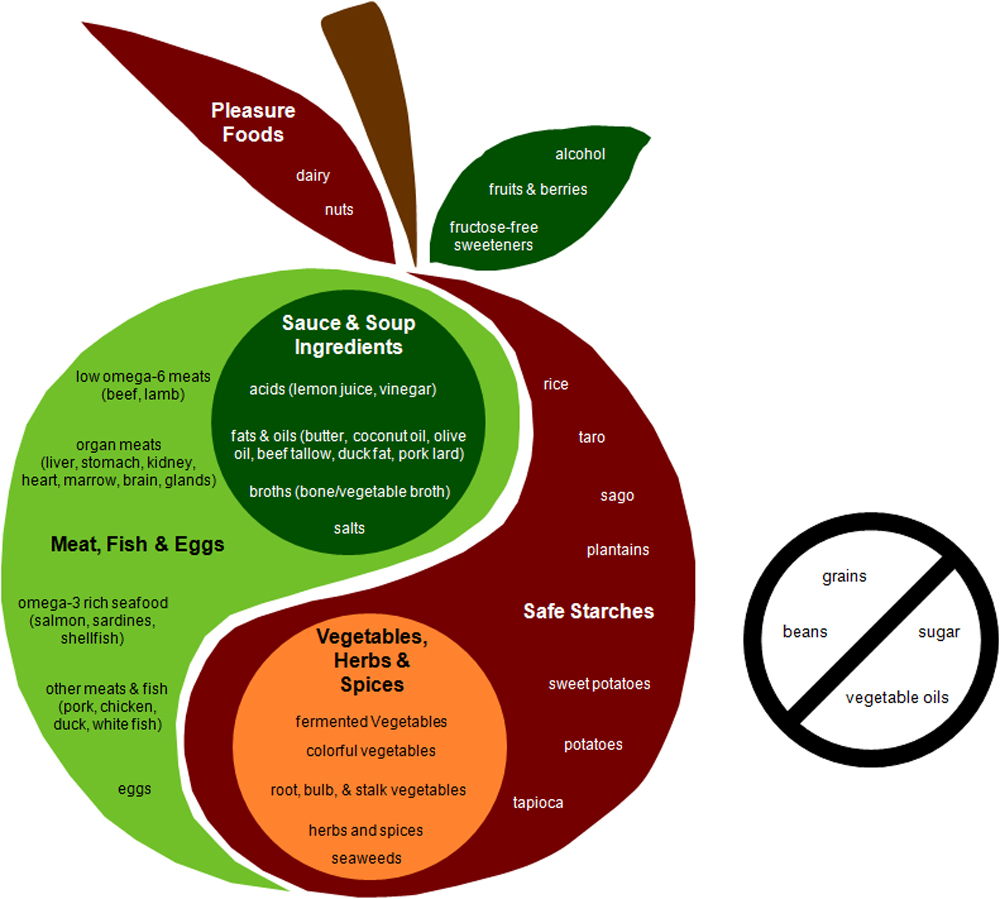
So I could see myself following one of these plans (or adopting the Weston A. Price style of eating), after I lose my weight. However, I am still 30 pounds away from goal. What to do? Low carbing has helped me to lose weight, control my blood sugars, normalize my blood pressure, and sleep better, but can it get me all the way to goal? Weight Watchers took me all the way to goal, but that is a semi-starvation plan and high in carbs, which is not good for my type II diabetes.
After a lot of thought, I will keep on with the low carb way of life (but I will double my carbs), count calories, exercise more, and perhaps other things (e.g., eliminate all artificial sweeteners, eat only whole, real foods), if necessary, until I reach my goal. However, I am very open to suggestions. When I am at goal, I will likely switch to one of the plans mentioned above for weight maintenance and general health.
Tuesday, August 9, 2011
Why Low Carb Works, At Least For Me
I've previously bought into a lot of the low carb hype: there is a metabolic advantage, carbs are fattening, low carb cures all, etc. But with time, wisdom arrives. The low carb way of eating seems to work for me, and, after a lot of thinking about it, here is why.
Protein and fat are very satiating and keep me full. Indeed, research shows that low carb dieters spontaneously consume fewer calories after feeling full, which leads to weight loss. This, I think, is the key element in weight loss on a carbohydrate restricted diet. But there are some other factors, too.
Protein and fat simply taste better than the low fat fare I ate on Weight Watchers. I hate skinless chicken breasts but love steak, eggs, and bacon. And vegetables. Food choices are simply easier, and for the first fifty pounds of my weight loss, I didn't have to count anything (although, I am now counting calories). I doubt I will ever go back to a Weight Watchers style, low fat diet. I genuinely like what I eat when low carbing.
That said, there seems to be a lot of misinformation about why low carb diets work. This post by Dana Carpender is a prime example. Dana, I love your cookbooks and use many of the recipes. But you are simply wrong here. She claims a five pound weight game came from eating a few too many grams of carbs over one week. In one sense, this is true and accurate. But it's not because carbs are fattening, as she implies.
When you slip up on a low carb diet, you do gain a lot of weight, almost immediately. But it's all water. When carbohydrates are stored in your body as energy in the form of glycogen, each molecule of glycogen is bonded to four molecules of water. This accounts for the first, rapid weight loss on a true, low carb diet: you deplete your glycogen stores (a 150 pound person has about a pound of glycogen stored up) and the water bonded to it. Hence, five pounds. When you replenish those glycogen stores by eating too many carbs, the water "loss" comes back. You can literally gain five pounds over night by cheating on a low carb diet.
I am quite certain this is what happened to Dana Carpender. Just get back in the saddle and try again, though you will deal with some side effects, such as hunger and higher blood sugar levels, for a couple of days. But be wise and understand it is a water gain, not a fat gain. Making you retain water is not the same thing as gaining fat, and the carbs she consumed are not fattening in the sense that she is storing extra fat. She is simply storing extra water. Think through it logically, folks: a few hundred (or even a few thousand) extra carb calories will not cause you to gain five pounds of fat.
Protein and fat are very satiating and keep me full. Indeed, research shows that low carb dieters spontaneously consume fewer calories after feeling full, which leads to weight loss. This, I think, is the key element in weight loss on a carbohydrate restricted diet. But there are some other factors, too.
Protein and fat simply taste better than the low fat fare I ate on Weight Watchers. I hate skinless chicken breasts but love steak, eggs, and bacon. And vegetables. Food choices are simply easier, and for the first fifty pounds of my weight loss, I didn't have to count anything (although, I am now counting calories). I doubt I will ever go back to a Weight Watchers style, low fat diet. I genuinely like what I eat when low carbing.
That said, there seems to be a lot of misinformation about why low carb diets work. This post by Dana Carpender is a prime example. Dana, I love your cookbooks and use many of the recipes. But you are simply wrong here. She claims a five pound weight game came from eating a few too many grams of carbs over one week. In one sense, this is true and accurate. But it's not because carbs are fattening, as she implies.
When you slip up on a low carb diet, you do gain a lot of weight, almost immediately. But it's all water. When carbohydrates are stored in your body as energy in the form of glycogen, each molecule of glycogen is bonded to four molecules of water. This accounts for the first, rapid weight loss on a true, low carb diet: you deplete your glycogen stores (a 150 pound person has about a pound of glycogen stored up) and the water bonded to it. Hence, five pounds. When you replenish those glycogen stores by eating too many carbs, the water "loss" comes back. You can literally gain five pounds over night by cheating on a low carb diet.
I am quite certain this is what happened to Dana Carpender. Just get back in the saddle and try again, though you will deal with some side effects, such as hunger and higher blood sugar levels, for a couple of days. But be wise and understand it is a water gain, not a fat gain. Making you retain water is not the same thing as gaining fat, and the carbs she consumed are not fattening in the sense that she is storing extra fat. She is simply storing extra water. Think through it logically, folks: a few hundred (or even a few thousand) extra carb calories will not cause you to gain five pounds of fat.
Sunday, July 31, 2011
The Low Carb Honeymoon is Over
Since February 14, 2011, I have lost 52 pounds by following a low carb way of eating (complete weight loss statistics are here in this chart), but the weight loss is beginning to slow down in the past few weeks. Perhaps it is because I have eaten too much, but there is also the possibility that I have hit the stalling point, when you lose between 17 and 20% of your original starting weight. To date, I have lost 18% of my starting weight, and I am still 30 to 40 pounds heavier than I would like. Have I stalled? I don't know, yet.
In 2005, I started Weight Watchers and lost over 100 pounds. I tracked that weight loss, too, and actually lost more weight per week on WW than on the low carb way of eating. Unfortunately, Weight Watchers is a semi-starvation diet, and when you stop starving yourself, the weight comes back on, and quickly. That happened to me, too, and it was quite embarrassing. You can see my WW weight loss statistics here.
To be clear, I vastly prefer the low carb way of life, as it has put my type II diabetes in remission and normalized my blood pressure. For that reason alone, I will continue low carbing and not go back to Weight Watchers, even though the weight loss there was more dramatic. Also, fat and protein offer greater satiety than anything on Weight Watchers; my hunger demons have been slain. I am full after eating and for me, that is the key to weight loss and weight loss maintenance. Those intrusive thoughts of food have simply vanished. Since this is a way of life for me, and not a diet (thanks to how it controls my type II diabetes), I plan on eating this way for the rest of my life.
Nevertheless, I am seeing that the low carb way of eating is not the magical silver bullet many claim it to be. Calories count. Gary Taubes, a science journalist I respect, and whose book, Why We Get Fat introduced me to low carbing, says calories do not count, only carbs. However, other people who I also respect, including Jenny Ruhl and Stargazey, tell me calories count. Most importantly, Jeff Volek and Stephen Phinney tell me calories count. I am retrenching and learning to a) eat a high fat, moderate protein, and low carb food plan and b) stay under the calorie threshold that will allow me to continue losing weight. Volek and Phinney devote a whole chapter in their recent book showing me how to do this. A very useful calorie counter, with an extensive database, is available for free at livestrong.com. This database blows away any others I have seen and has pretty much everything I eat in it. Now it is an essential tool for my weight loss management.
So the low carb honeymoon is now over. The lifelong process of living low carb, losing weight, and getting lean has begun.
In 2005, I started Weight Watchers and lost over 100 pounds. I tracked that weight loss, too, and actually lost more weight per week on WW than on the low carb way of eating. Unfortunately, Weight Watchers is a semi-starvation diet, and when you stop starving yourself, the weight comes back on, and quickly. That happened to me, too, and it was quite embarrassing. You can see my WW weight loss statistics here.
To be clear, I vastly prefer the low carb way of life, as it has put my type II diabetes in remission and normalized my blood pressure. For that reason alone, I will continue low carbing and not go back to Weight Watchers, even though the weight loss there was more dramatic. Also, fat and protein offer greater satiety than anything on Weight Watchers; my hunger demons have been slain. I am full after eating and for me, that is the key to weight loss and weight loss maintenance. Those intrusive thoughts of food have simply vanished. Since this is a way of life for me, and not a diet (thanks to how it controls my type II diabetes), I plan on eating this way for the rest of my life.
Nevertheless, I am seeing that the low carb way of eating is not the magical silver bullet many claim it to be. Calories count. Gary Taubes, a science journalist I respect, and whose book, Why We Get Fat introduced me to low carbing, says calories do not count, only carbs. However, other people who I also respect, including Jenny Ruhl and Stargazey, tell me calories count. Most importantly, Jeff Volek and Stephen Phinney tell me calories count. I am retrenching and learning to a) eat a high fat, moderate protein, and low carb food plan and b) stay under the calorie threshold that will allow me to continue losing weight. Volek and Phinney devote a whole chapter in their recent book showing me how to do this. A very useful calorie counter, with an extensive database, is available for free at livestrong.com. This database blows away any others I have seen and has pretty much everything I eat in it. Now it is an essential tool for my weight loss management.
So the low carb honeymoon is now over. The lifelong process of living low carb, losing weight, and getting lean has begun.
Subscribe to:
Posts (Atom)